Nasal Rinsing for Allergen Clearance After Outdoor Exposure
Flushing out trapped allergens after coming indoors can interrupt the allergic reaction cycle.
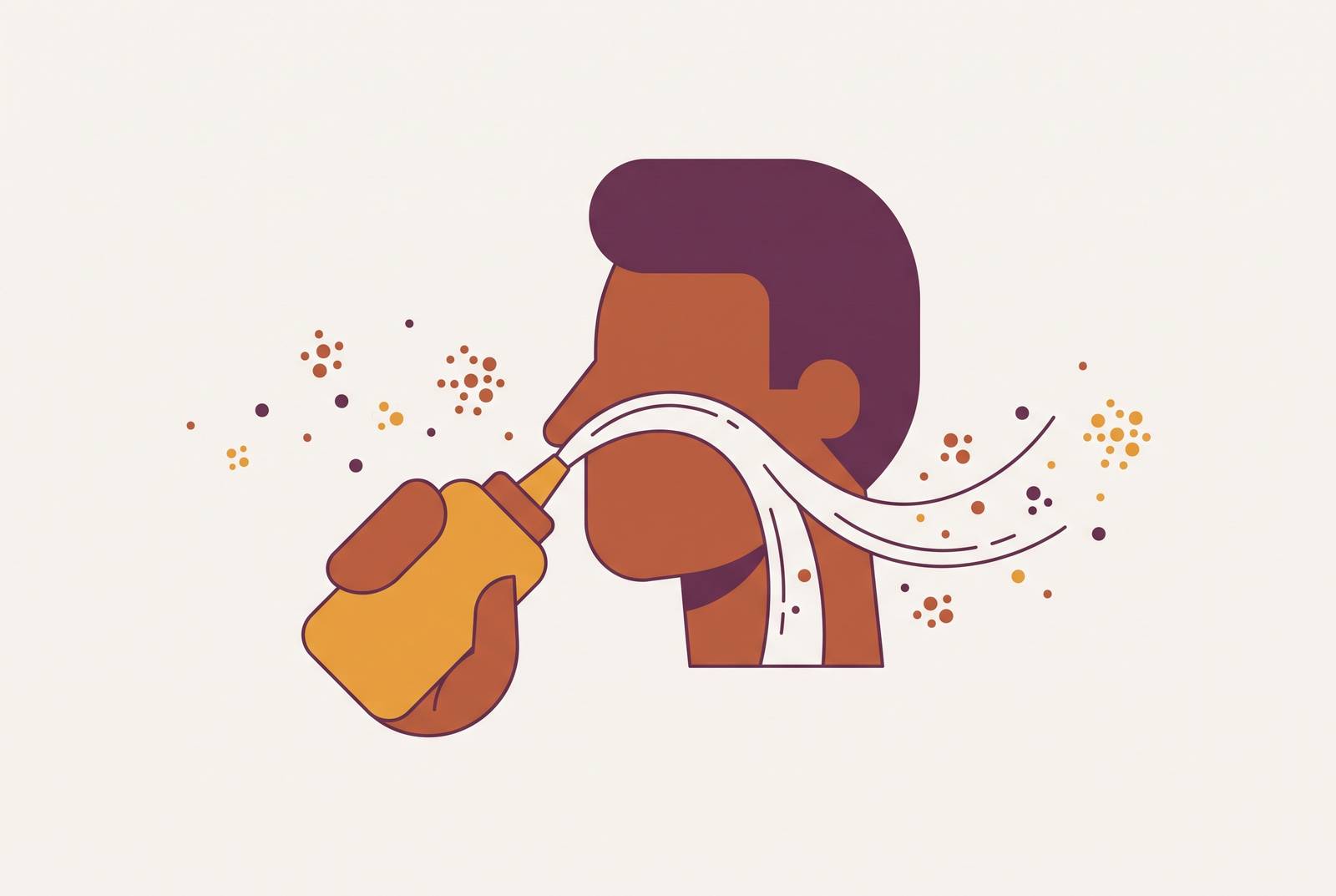
Nasal rinsing after outdoor exposure addresses a problem that does not end at the front door. Allergens left in the nose can keep provoking inflammation after a person comes inside. By washing away some of those allergens, rinsing can be part of daily allergy care backed by evidence, though it may not bring relief and does not change the underlying sensitivity.
Why allergens don't stop working once you come indoors
Coming back indoors can feel like the end of an encounter with pollen. Particles already caught in the nose remain against the lining of the nasal passages after you come indoors, where they can adhere, penetrate and continue provoking an immune response. The surroundings have changed, but the contact has not necessarily stopped. For someone who is sensitized to those allergens, that remaining contact can sustain IgE-mediated inflammation, the allergic response involving antibodies called IgE.
The nasal epithelium, the tissue that lines the passages, traps airborne particles. That makes it a reservoir as well as a filter. Pollen, dust mite debris, mold spores and pet dander can remain there after exposure ends, although their sources are not all outdoors.
Pollution adds another burden to outdoor exposure. Pollutants can damage the airway lining and weaken mucociliary clearance, the process that normally helps move trapped material out. With that clearance impaired, allergens can become lodged more readily and penetrate more deeply into the lining, where they encounter immune cells. The problem is therefore not simply how much pollen is in the air. It is also how well the nose can remove what it catches, which raises the practical question of what can be done immediately about the burden left behind.
What nasal rinsing actually does to the allergen load in the passages
Nasal rinsing acts first through mechanical removal. The irrigation solution dislodges allergen particles, excess mucus and inflammatory debris from the nasal lining, reducing the material left in contact with it. This is a physical intervention. Its immediate purpose is to remove some of the trigger before further processing by mucosal immune cells. In that sense, rinsing targets the contact that allows an allergic reaction to keep developing.
Why should washing particles out change symptoms as well as make the nose feel cleaner? Reducing the allergen load can reduce the signal reaching immune cells in the lining. That can lower mast-cell activation and, in turn, lessen the release of histamine and pro-inflammatory cytokines, the chemical signals involved in the reaction. The aim is to interrupt the cascade early. It does not follow that a rinse removes every particle or reverses all inflammation that has already begun.
Wu & Pu’s 2025 retrospective study in the American Journal of Translational Research describes both mechanical allergen removal and changes in the nasal microbiota as ways irrigation may reduce inflammation and alter the nasal environment. That suggests rinsing may do more than flush particles out, but washing them away is still the clearest reason to rinse after exposure. Timing follows from that mechanism. Rinsing shortly after returning indoors gives trapped allergens less time against the epithelium before deeper penetration and further immune signaling. This makes prompt use biologically sensible, without establishing a precise deadline or guaranteeing a particular degree of relief.
What the clinical evidence shows — and where its limits are
Cochrane’s 2018 review, Saline Irrigation for Allergic Rhinitis, found possible symptom improvement compared with no saline irrigation, but rated the evidence low or very low quality. Because the studies were designed in different ways, their results are less certain than the biological explanation alone might lead a person to expect. They support a qualified recommendation. A plausible mechanism and a consistent clinical benefit are related questions, but they are not the same question.
Qidi Hu and colleagues’ 2025 systematic review and network meta-analysis compared 11 nasal irrigation treatments in 23 studies that included thousands of people. Multiple active-ingredient rinses outperformed saline placebo on total nasal symptom scores, with resveratrol and budesonide showing the strongest symptom relief and cinnamon bark the strongest quality-of-life improvement. However, comparisons among augmented rinses do not erase the earlier uncertainty or settle the best routine for every person. The findings support considering options beyond plain saline for persistent or moderate-to-severe symptoms, while leaving room for better trials to refine their use.
The downstream consequences of leaving trapped allergen load unaddressed
Persistent allergy symptoms do not stay neatly confined to the nose. When symptoms continue into the night, sleep becomes part of the concern, followed by fatigue and the demands of the next day. The effects can reach ordinary tasks that require attention, judgment and coordination.
The American College of Allergy, Asthma & Immunology lists trouble making decisions, irritability and reduced hand-eye coordination as some of the effects linked to allergy-related fatigue and cognitive impairment. Those difficulties can affect school, work and driving and raise the risk of injuries and car crashes. What begins as a persistent physical distraction can therefore interfere with how a person functions. At the same time, evidence about the effects of allergies should not be mistaken for proof that rinsing alone prevents those outcomes.
Allergen- and pollutant-exposed epithelial cells release alarmins, including TSLP, IL-25 and IL-33, which initiate and perpetuate immune signaling in the tissue. These signals help explain why a reaction can outlast the original encounter. Repeated pollutant-and-allergen exposure can contribute to lasting structural mucosal remodeling. Disease that persists can also lead to chronic sinusitis with ongoing facial pain, while people with asthma can have allergen-triggered exacerbations that leave them more dependent on an inhaler or in need of emergency care.
A 2026 systematic review and meta-analysis of animal models found that pollutant exposure increased eosinophils, IL-4, IL-5, IL-13 and allergen-specific IgE in nasal mucosal tissue. It also reported reduced ZO-1, a tight-junction protein, although that exploratory finding came from only a few studies. What happens in animal studies leaves open what will happen to any one person. It does support the biological concern that a weakened barrier allows deeper allergen penetration, so each outdoor exposure left unaddressed can add a small increment to an ongoing inflammatory burden.
How to rinse correctly — device, solution, and water safety
Only distilled, sterile, or properly boiled and cooled water should be used for nasal irrigation. Untreated tap water must never be used. It can carry pathogens straight into the nasal passages, so a rinse meant to help can cause serious harm. Water safety is the prerequisite for every device and solution discussed here.
With safe water established, the main device options are neti pots, squeeze bottles and pressurized rinse systems. All deliver saline into the nasal passages, but they differ in volume, pressure and ease of use. Squeeze bottles and pressurized systems tend to produce more thorough flushing than neti pots for most adults. Device choice still has a practical side. Children and older adults can use nasal rinsing safely, with technique instruction and appropriate device sizing especially important for children.
Plain isotonic saline is the baseline solution for everyday use. Its salt concentration is about the same as that of body fluids, while hypertonic saline has a higher salt concentration. The latter may draw more fluid from swollen tissue and improve clearance, but it can also cause more transient stinging.
For people with persistent or moderate-to-severe allergic rhinitis, the lesson from the newer treatment comparisons is to discuss augmented rinses with a clinician. Options studied include resveratrol and budesonide added to a saline base. The network meta-analysis gave resveratrol a 92.08% SUCRA score for symptom efficacy, which ranks how well it works against the other treatments and does not give the percentage of patients sure to get relief. The stronger symptom results do not turn every studied additive into a do-it-yourself ingredient.
The final practical choice is when to rinse. Prompt use after returning from outdoors aligns most closely with the purpose of reducing contact between trapped allergens and the lining. The evidence here gives no exact time to rinse after exposure. The useful habit is to connect rinsing with returning indoors, using the safe water, suitable device and solution that make repetition practical.
Where nasal rinsing fits in a broader allergy management plan
Rinsing reduces the immediate allergen burden, but it does not retrain the immune system. Its benefit therefore depends on repetition as exposure recurs. A person may clear particles today and still react to the same allergen tomorrow because the underlying sensitization remains. That distinction defines its role in treatment. Rinsing is a clearance habit, while other treatments address either the reaction that follows exposure or the sensitivity that makes the reaction possible.
Antihistamines block part of the reaction, while nasal corticosteroid sprays dampen inflammation, but neither changes which allergen triggers it. Their risks also differ from those of rinsing. Antihistamines can cause drowsiness, nasal corticosteroid sprays used improperly or for extended periods can cause nosebleeds and dryness, and nasal decongestant sprays can cause rebound congestion. The FDA requires a boxed warning for serious neuropsychiatric effects with montelukast, sold as Singulair, and the ICAR 2023 guidelines no longer recommend it as a first-line option.
Immunotherapy serves a different purpose by inducing tolerance to the specific allergens driving sensitization. Sublingual immunotherapy, or SLIT, delivers allergen proteins through drops or tablets under the tongue, where dendritic cells capture them and initiate a tolerance cascade. Clinical trial evidence supports meaningful reductions in symptoms and medication use with grass and house dust mite SLIT tablets, with sustained benefits observed up to one to two years after a three-year course. Those tablet findings should not be treated as interchangeable evidence for every form of SLIT.
Choosing the target requires knowing the sensitization profile. At-home finger-prick panels can identify sensitization to common inhalant allergens, including tree pollen, grass, dust mites, mold and pet dander, providing information to guide personalized immunotherapy.