The Indoor Environment as the Overlooked Source of Fatigue and Cognitive Decline in Allergy Sufferers
Year-round indoor allergens may be causing your brain fog and fatigue.
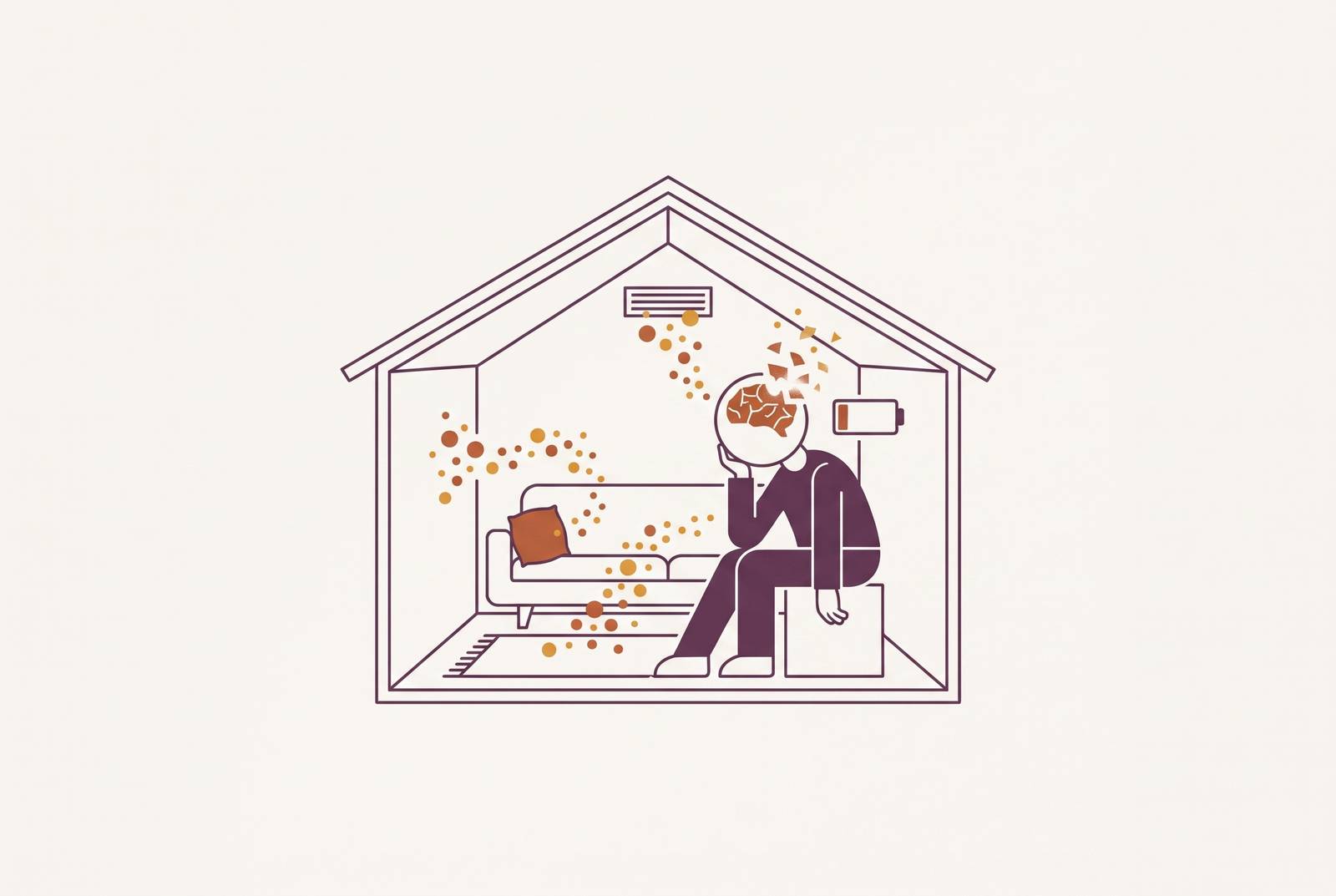
Indoor allergies can contribute to persistent brain fog, fatigue, and poor sleep when exposure to dust mites, mold, or other household allergens continues throughout the year. The overlooked link is the home environment, where repeated allergic inflammation and disrupted sleep can make exhaustion feel normal. Finding lasting relief starts with identifying the trigger and distinguishing symptom control from treatment that changes the allergic response.
Why people with year-round allergies blame stress, sleep, or aging — but not their home
Someone rereads the same email twice and still cannot hold onto its meaning. Later, they walk into a room and forget why. A demanding week seems like the obvious explanation, followed by poor sleep habits or aging. People rarely think of allergies unless sneezing or itchy eyes are hard to ignore. Yet cloudy thinking, forgetfulness, and difficulty staying on task can accompany allergic rhinitis.
The mismatch makes the problem easy to overlook. People expect allergies to make their nose run. When mental sluggishness persists after a full night’s sleep, they may question their stamina. The home seems an unlikely suspect because it is where they go to rest.
A person who feels worse during pollen season and better afterward has a reason to look for an environmental cause. Someone exposed to allergens throughout the year may never get that clear comparison. The fog becomes a baseline. That raises a useful question about whether the place meant for recovery is also a source of exposure.
How an allergen in the bedroom becomes inflammation in the brain
In a sensitized person, encountering dust mite proteins or mold spores can trigger histamine release and the production of inflammatory signaling molecules called cytokines. The response begins with an allergen, but its effects need not stay in the nose. Signals from the immune system can affect how the brain works as well as how the body feels. This provides a biological explanation for why thinking may feel harder during an allergic response.
Histamine has more than one role in this chain. In the brain, it helps support wakefulness, which explains why drugs that block brain H1 receptors can reduce alertness. H3 receptors help regulate the release of neurotransmitters, including dopamine, norepinephrine, and acetylcholine, that support attention and wakefulness. These receptor functions help explain the connection between histamine and cognition, although they do not establish exactly which mechanism accounts for an individual’s fog.
Inflammatory cytokines can also affect neurotransmitter synthesis and communication between nerve cells. These effects may slow processing, weaken working memory, and make it harder to organize thoughts. When the immune system stays active, it may also affect cortisol, which could in turn affect how memories form. Forgetfulness alone does not mean that the brain has been injured. Allergy-related fog can stem from more than feeling uncomfortable, and repeated exposure can keep the inflammatory response going.
Why dust mites and mold are uniquely effective at keeping this process running all year
Dust mites live in bedding, carpets, and soft furnishings, placing their allergens in the rooms where people spend long stretches of time. A person may spend hours with their face close to allergen-containing bedding without recognizing the exposure. Higher indoor humidity can also favor mite reproduction, helping sustain the source throughout the year.
Mold occupies a different set of household locations. Damp basements, poorly ventilated spaces, and bathrooms can support growth, so exposure may recur during ordinary daily routines. People with mold sensitivity can report fog, memory problems, and difficulty concentrating. Those symptoms alone, however, do not establish which biological pathway is responsible. Mold allergy and claims about direct effects from mycotoxins should not be treated as interchangeable explanations for everyday cognitive symptoms.
Other allergens can complicate this indoor pattern. Pet dander is light, sticky, and hard to remove with regular cleaning, while fur can bring more allergens into the home. Pollen can come in on clothing, through open windows, and on pets, so people can be exposed to more of it even indoors. For someone sensitive to several triggers, the bedroom, carpet, and bathroom may each be a source of allergens at the same time. Unlike a recognizable pollen season, this pattern offers no dependable calendar break.
The sleep-destruction pathway — how nighttime congestion turns adequate sleep into non-restorative sleep
Eight hours in bed can still end in exhaustion. That experience points to a distinction between sleep duration and sleep quality, although it does not identify allergies by itself. With allergic rhinitis, nighttime congestion can interrupt the sleep needed for clear thinking the next day. The person has allowed enough time for rest but has not necessarily received restorative sleep.
Histamine helps dilate blood vessels in the nasal passages and increase mucus production. The resulting congestion and postnasal drip can make nasal breathing difficult and encourage mouth breathing. Repeated disturbance can fragment sleep cycles, limiting restorative deep sleep. Deep sleep helps the body repair itself and, along with REM sleep, helps with memory consolidation.
Nasal obstruction and mouth breathing can also worsen snoring and contribute to sleep-disordered breathing, including sleep apnea. That possibility deserves distinction from simple congestion. Reduced oxygen during sleep should not be assumed from a blocked nose alone, nor should every tired morning be attributed to an oxygen problem. The more immediate allergy-related issue may be repeated disruption of otherwise adequate sleep time.
This sleep pathway can reinforce the inflammatory pathway. Cytokines can disturb sleep, while sleep loss can amplify inflammatory signaling. Being exposed to allergens day after day may therefore leave a person with inflammation during the day and too little recovery at night. Across repeated nights, that interaction can deepen fatigue and make concentration harder even when bedtime remains consistent.
Why the year-round, indoor pattern makes self-diagnosis almost impossible
The same exposure pattern that sustains symptoms also conceals their source. Indoor allergens can be there every day, leaving people exposed for hours at night with no clear break between seasons. By contrast, symptoms that arrive in April, peak in May, and resolve in July offer a recognizable sequence. When that pattern repeats each year, someone has a reason to suspect pollen.
The clues may instead be small differences within a day. Fog that is worst in the morning, fatigue that intensifies in a carpeted room, or symptoms that worsen after humid weather can suggest an environmental connection. Each clue is easy to brush off on its own. Without a record of when and where symptoms happen, a person may remember only that they always feel tired.
There is also genuine overlap with other causes. Stress, depression, thyroid disorders, and COVID sequelae can leave a person tired or struggling to think clearly. Meanwhile, a person may see morning congestion as a small nuisance with no link to the mental sluggishness that worries them more.
A symptom diary can make these subtle patterns visible. It cannot establish a diagnosis, but it gives a clinician a more useful starting point than fatigue alone. Finding the right cause calls for a clinician to look into the symptoms instead of putting each episode down to another bad night. When the pattern points to allergy, testing can help show whether the person has sensitization to indoor allergens that fit their symptoms.
What antihistamines and nasal sprays actually do — and what they leave running
Allergy medicine can sometimes add its own fog to the fog it is meant to relieve. First-generation antihistamines cross the blood-brain barrier and block histamine receptors involved in wakefulness. The result can be reduced alertness on top of fatigue from allergic symptoms and poor sleep. Someone taking them may struggle to tell whether the allergen, the medication, or both explain the difficulty concentrating.
Newer antihistamines do not all have the same effects. Cetirizine can still cause drowsiness, while loratadine’s reported drowsiness incidence is low and comparable to placebo. Dose, age, timing, and individual metabolism can influence the experience. Sneezing less therefore does not always mean that a person will think more clearly during the day to the same degree.
These medicines remain useful for symptom control. Nasal sprays can reduce local inflammation and congestion, potentially easing an important source of sleep disruption. Their tolerability problems include irritation and nosebleeds, while antihistamine sprays can also cause drowsiness or nasal burning. Depending on the drug and the person, antihistamines can pose additional risks involving falls, confusion, urinary retention, certain types of glaucoma, or abnormal heart rhythms with some older formulations.
The distinction is between controlling symptoms and changing sensitization. Antihistamines and nasal sprays do not teach the immune system to tolerate the allergen, even when they provide meaningful relief. If exposure continues, a person may need to keep taking medication, as symptoms can return when it wears off. That limitation explains the interest in treatment directed at the allergic response itself.
How sublingual immunotherapy addresses the immune response rather than its outputs
Sublingual immunotherapy, or SLIT, aims to build tolerance to a relevant allergen. That is a different treatment goal. Where an antihistamine blocks a consequence of the allergic response, immunotherapy seeks to reduce the response over time. Its relevance depends on identifying an allergen that fits the person’s sensitization and symptoms.
The immune changes develop in stages. Early effects include desensitization of mast cells and basophils, reducing the immediate reactivity associated with histamine release. Treatment also induces a blocking antibody associated with immune tolerance. IgE may rise at first, then fall as tolerance builds. An early antibody change therefore does not tell the whole story of how treatment is progressing.
Clinical trials and meta-analyses support SLIT’s effectiveness for allergic disease, with long-term benefits that can persist after a completed course. That evidence is not a promise that it will resolve every case of fatigue or brain fog. Symptoms that have another cause still need to be explained. The practical comparison with injectable immunotherapy also involves trade-offs, since quality-of-life outcomes can be similar while injections may offer advantages in symptom and medication scores.
SLIT’s home administration and lack of needles can make treatment easier to sustain. Severe systemic reactions are rare, but rare does not mean impossible. Safety requirements depend on the treatment and the patient, so home use should not be understood as permission to begin without clinical guidance. The choice rests on the relevant allergen, expected benefit, safety, and a course the person can realistically complete.
Recognizing the pattern and deciding when to get tested
For a reader deciding what to do next, the most useful question is whether symptoms follow place and time. Morning congestion, fog that feels worse in the bedroom, and fatigue that intensifies in humid conditions deserve attention as a pattern. Feeling unrested despite adequate sleep adds another clue. Marked improvement during travel or extended time away from home strengthens the reason to consider an indoor trigger, without proving one.
Carpeting, pets, older soft furnishings, and past moisture damage can point toward possible exposures. Their presence does not establish that they explain the symptoms. A diary noting where and when fatigue, congestion, and thinking difficulties occur is a practical first step. Writing down medication use can also help a person and their clinician consider whether allergies or drugs are making them drowsy.
Symptoms that last and get in the way of daily life need to be checked by a clinician, especially when the diary shows this indoor pattern. Specific IgE blood testing can identify sensitization to dust mites, mold, pet dander, and other allergens. Some at-home tests use a finger-prick to collect blood. A positive result indicates sensitization, however, and needs to be interpreted with the exposure history and symptoms rather than treated as proof that an allergen caused the fog.
That combination gives the patient and clinician a basis for discussing treatment while considering other explanations. Symptom control may provide relief, and allergen immunotherapy may be appropriate when the findings support it. The next step is to bring the home environment into an evaluation that might otherwise overlook it.