Allergen Exposure in School Classrooms
Dust mites, mold, and pet dander concentrate where children breathe.

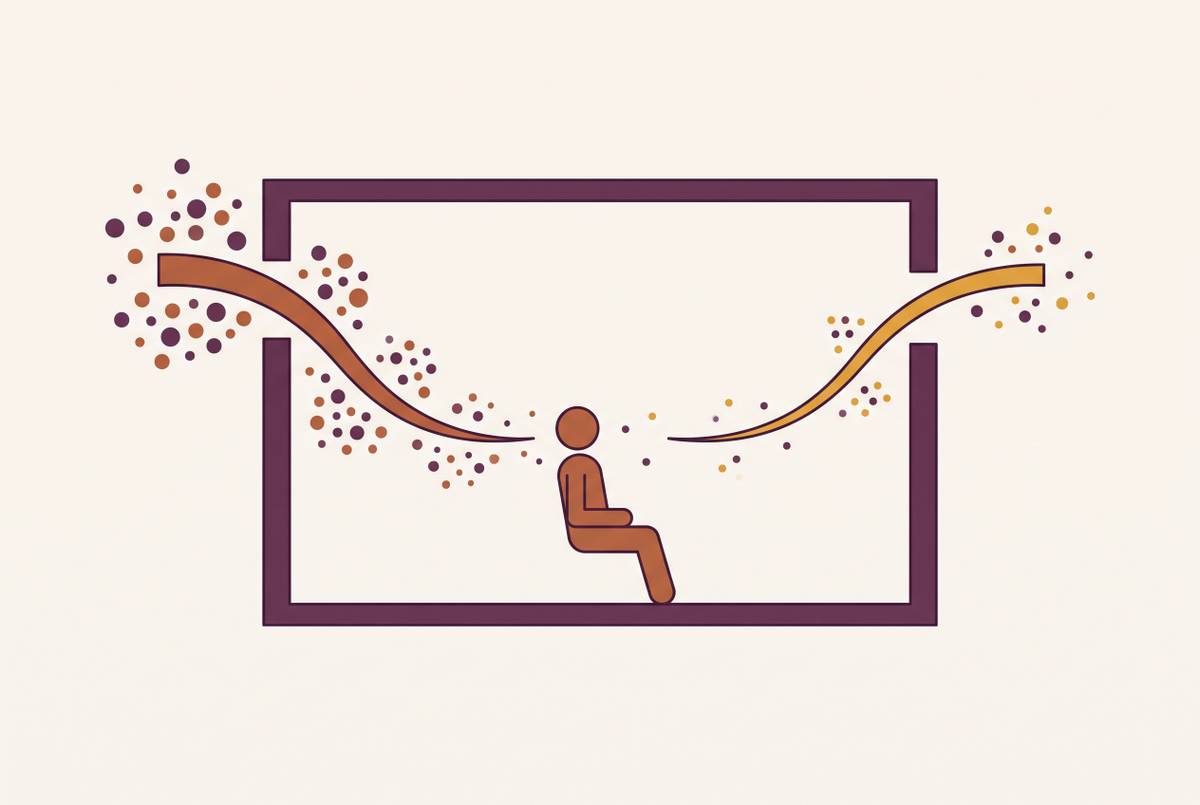
Food allergy affects up to 10% of kids, and roughly 1 in 15 schools deals with an anaphylaxis event in a given year. At that rate, it's something happening somewhere in a typical school building this year. But food is only one category on a long list. Classrooms hold dust, mold spores, pet dander, pollen, and latex, all layered into a space where kids sit still for hours a day, breathing the same air on loop. Even the most cautious "allergy aware" policies, the kind many schools have adopted, stop short of promising an allergen-free room, because that room doesn't exist. What actually matters is which allergens show up, where they pool inside the building, and what that does to a kid who still has to sit still and pay attention anyway.
Dust mites, carpets, and upholstered furniture as the classroom's most persistent allergen source
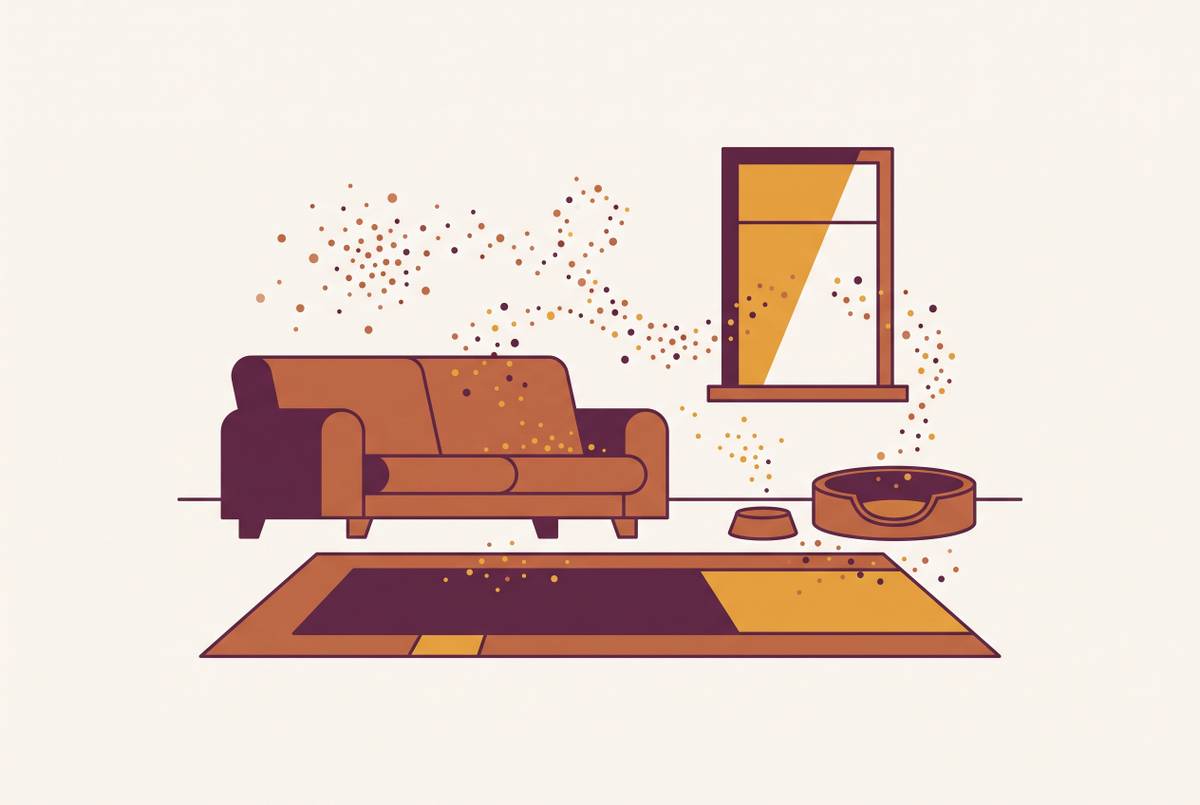
Dust mites cause more indoor asthma trouble than almost anything else schools deal with, thriving on carpet fiber, an upholstered reading chair, and the soft rug in the kindergarten circle-time corner. All of it traps moisture and shed skin cells, which is the entire diet of a dust mite.
A study sampling classrooms across Birmingham, Detroit, and Houston found dust mite, cat, and cockroach allergens in every single schoolroom tested, though concentrations shifted by room type and season. Every room, including the tidy ones. Clutter isn't the variable that matters here.
Age of the building is. A 2024 study of elementary school kids in Fukui, Japan found about 18.8% had allergic rhinitis traced specifically to house dust mites, and that number tracks with a simple funding reality: aging school infrastructure rarely has budget set aside for indoor air quality work, so allergen buildup just accumulates year over year in a way a newer facility wouldn't allow. Carpet that's due for replacement doesn't get replaced. Vents that need cleaning stay dirty, sometimes for years. The allergen load doesn't reset each September the way a lot of people assume it does. It stacks, term after term, and no line item in the maintenance budget resets it.
Mold in school buildings: where it grows, how aging infrastructure worsens it, and its effects on children's airways
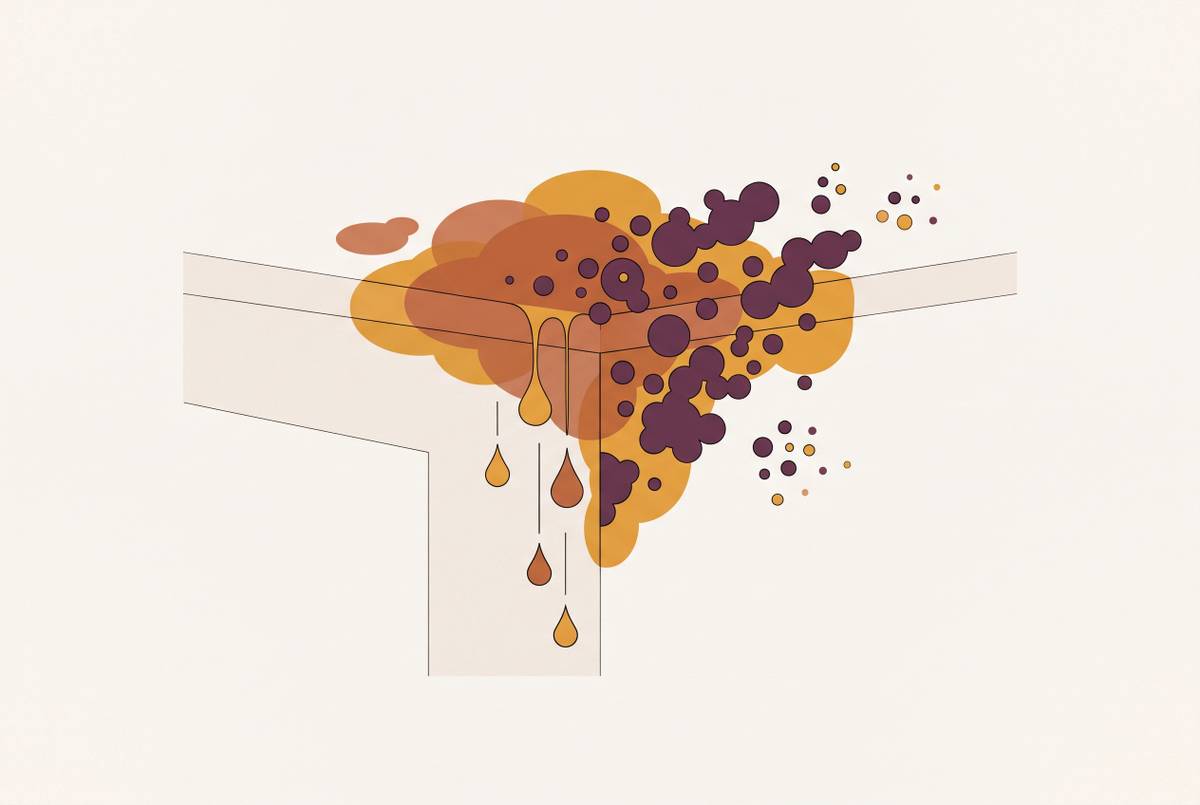
Mold needs damp, and schools have no shortage of it. Bathrooms, basements, poorly ventilated classrooms, the corner near a roof that's been leaking since before this year's students were even enrolled. Aging public school buildings are especially prone to this, since deferred maintenance on roofs and windows creates exactly the moisture pockets mold needs to take hold, and once it's established, it doesn't need much to keep going.
Longitudinal data collected between 2006 and 2017 ties mold exposure closely to both the onset and the worsening of allergic rhinitis symptoms in children. A meta-analysis backs that up from another angle, finding that risk for allergic rhinitis rises significantly with exposure to dampness and mold. Most of that research was done in homes, but the mechanism itself doesn't check an address. Damp drywall behaves the same in a bedroom and in a fourth-grade classroom.
Indoor mold exposure during childhood also links to asthma, both new cases developing and existing cases getting worse. None of this stays contained indoors, either. Outdoor mold in soil and decaying leaves near playgrounds hitches a ride into the classroom on an open window, or on a kid's jacket after recess.
Pet dander in classrooms: the classroom pet problem and the allergens children carry in from home
That same Birmingham, Detroit, and Houston study found cat dander (Fel d1) in every classroom sampled, including rooms with no classroom pet of any kind. Most parents assume the animal has to be physically present for its allergen to show up. Most parents assume the animal has to be physically present for its allergen to show up, but its allergen can be detected even without the animal present.
Cat and dog allergens are sticky proteins. They cling to fabric, and they travel well. A kid with a cat at home carries that protein into school on a jacket sleeve, a backpack strap, even hair, and it sheds into classroom air over the course of the day. Multiplied by 25 or 30 kids, a pet-free classroom can carry a dander load heavier than a room with an actual guinea pig cage sitting in the corner.
That distinction should change how anyone traces a child's symptoms back to a cause. Pet allergens mostly travel in from home rather than originate inside the school. Mice, mold, and dust mites work differently: research finds those present in schools at high levels independent of what any one family brings in. So when a child's symptoms flare at school, the source might already be sitting in the walls, or it might be riding in on a classmate's backpack, and those two situations call for completely different fixes. On top of that passive layer, animals kept as classroom pets add their own allergens directly to the air the kids are breathing.
Pollen inside the building: how outdoor allergens find their way into classrooms and concentrate at children's breathing height
Pollen gets in the obvious ways: open windows, propped doors, HVAC intake. It also rides in on clothing and hair, the same passive-transfer route pet dander uses.
One finding should reframe how anyone thinks about this risk. A study measuring pollen at different heights found significantly more total pollen collected at 1.5 meters above ground (25,204 grains) than at 35 meters (16,218 grains) or 70 meters (14,408 grains). A child's breathing zone sits almost exactly at 1.5 meters. So the exact height where kids breathe is the height where outdoor pollen piles up the most. Time spent near an open window, or out on the playground, lines up precisely with the zone where pollen count peaks. That's the physical layout of an average classroom working against the kids sitting in it.
The dose-response curve isn't gentle, either. A study of 98 children with allergic rhinitis and asthma found nasal symptom scores climbed in a straight line as pollen counts rose from 0 to 30 grains per cubic meter, then got steeper as counts pushed toward 80. Moderate pollen days aren't a free pass just because they're not the worst days of the season. Symptoms build well before counts get dramatic, and they build faster once they do.
Treating this as a temporary six-week window worth waiting out gets the timeline wrong. Climate patterns are shifting when and how long allergenic plants grow, and that has stretched pollen seasons longer than they used to run. The exposure window inside classrooms each year is widening, and any policy still built around a short spring season is already out of date.
Food allergens and latex: the less obvious triggers hiding in school supplies, snacks, and shared spaces
The nine major food allergens, peanuts, tree nuts, milk, eggs, wheat, soy, fish, shellfish, and sesame, appear constantly in school life: cafeteria lines, classroom snack time, cooking projects, birthday celebrations. That much is obvious to any parent who's filled out a school health form.
The exposure routes are where it gets less obvious. A child touches a surface with allergen residue, skips hand-washing, then rubs an eye or touches their mouth, and no ingestion is required for a reaction to start. Some highly sensitized kids react to airborne allergen protein alone, inhaling it rather than eating it, a mechanism most allergen policy doesn't account for.
Latex deserves its own mention, mostly because it doesn't fit the "food allergy" mental model most parents carry around. Balloons at a classroom party, rubber gloves in science class, rubber bands, safety goggles, certain school supply materials: all of it sits outside the cafeteria and outside most parents' radar.
Blanket bans are not the safer default, which runs against what most people assume. Recent practice guidance actually recommends against site-wide food prohibitions, like universal peanut bans, citing very low certainty of evidence for their effectiveness. The guidance instead points toward allergen-restricted zones reserved for specific circumstances, which is a real reversal from the instinct to just ban the allergen outright building-wide. Parents walking in expecting a total-ban policy should know that's not where the evidence sits, and pushing a school toward one isn't automatically the safer move it feels like.
How allergen exposure in the classroom affects children's learning and daily well-being
More than 80% of children with asthma are sensitized to at least one indoor allergen. For most asthmatic kids, the classroom itself functions as a daily exposure event, not an occasional flare-up tied to a bad pollen day.
Why does that reach past breathing and into how a kid functions in class? Allergens trigger IgE antibodies, which set off histamine and other inflammatory chemicals. Histamine isn't just the molecule behind a stuffy nose: it also works as a neurotransmitter that regulates alertness and sleep. Classroom allergen exposure runs through the same chemical pathway that governs how awake and focused a kid feels, not only how much their nose runs that afternoon.
That produces sneezing, itchy eyes, congestion, brain fog, trouble concentrating, and irritability stacked over the course of a school day. A teacher watching from the front of the room might read all of that as inattention, or write it up as a behavior note home. What's actually happening is histamine doing what histamine does, chemically, whether or not anyone in the room recognizes it that way.
And the effect doesn't end at dismissal. Nasal blockage from a day's worth of allergen exposure leads to mouth breathing, snoring, and fragmented sleep that night. Research has linked untreated allergic rhinitis to more frequent nighttime awakenings and less deep sleep. So the cycle compounds on itself: a kid walks into school already behind on sleep, because the previous day's classroom exposure disrupted the night before it.
The limits of symptom management for children with significant allergen exposure at school
Schools can't eliminate allergens, full stop. Dust mites, mold, dander, and pollen persist no matter how aggressive the cleaning schedule gets, and policy on the food side is trending away from hard bans, not toward them. If the environment can't be made allergen-free, and it isn't supposed to be locked down through bans either, what's actually left is figuring out what to do about exposure itself.
Over-the-counter medication treats the symptom, not the source, and it does nothing to retrain how the immune system responds to the allergen. For kids on first-generation antihistamines, there's a hidden cost buried in that trade: the sedation side effect stacks its own cognitive drag on top of whatever the allergy was already causing. The fix, in that case, quietly extends the exact problem it was supposed to solve. Most symptom-first approaches treat the sneeze while ignoring what the treatment itself costs in alertness, which is a strange trade to keep making year after year without questioning it.
Allergen immunotherapy stands apart as the one intervention shown to produce disease-modifying effects in IgE-mediated respiratory allergies. It targets the underlying sensitization, not the day's symptom list, and that's a meaningfully different goal than anything sold over the counter at a pharmacy counter.
Sublingual immunotherapy (SLIT) has the evidence to back that distinction up. A review found solid support for clinically meaningful drops in both symptoms and medication use, with benefits still holding one to two years after a three-year treatment course had wrapped up. For a kid who's going to sit in classrooms full of dust mites, mold spores, dander, and pollen for years regardless of what changes in the building, that kind of durable, underlying shift does more for daily symptoms than another box of antihistamines tossed into the backpack.