Sick Building Syndrome vs Indoor Allergy Symptoms
Similar symptoms don't always point to the same cause.
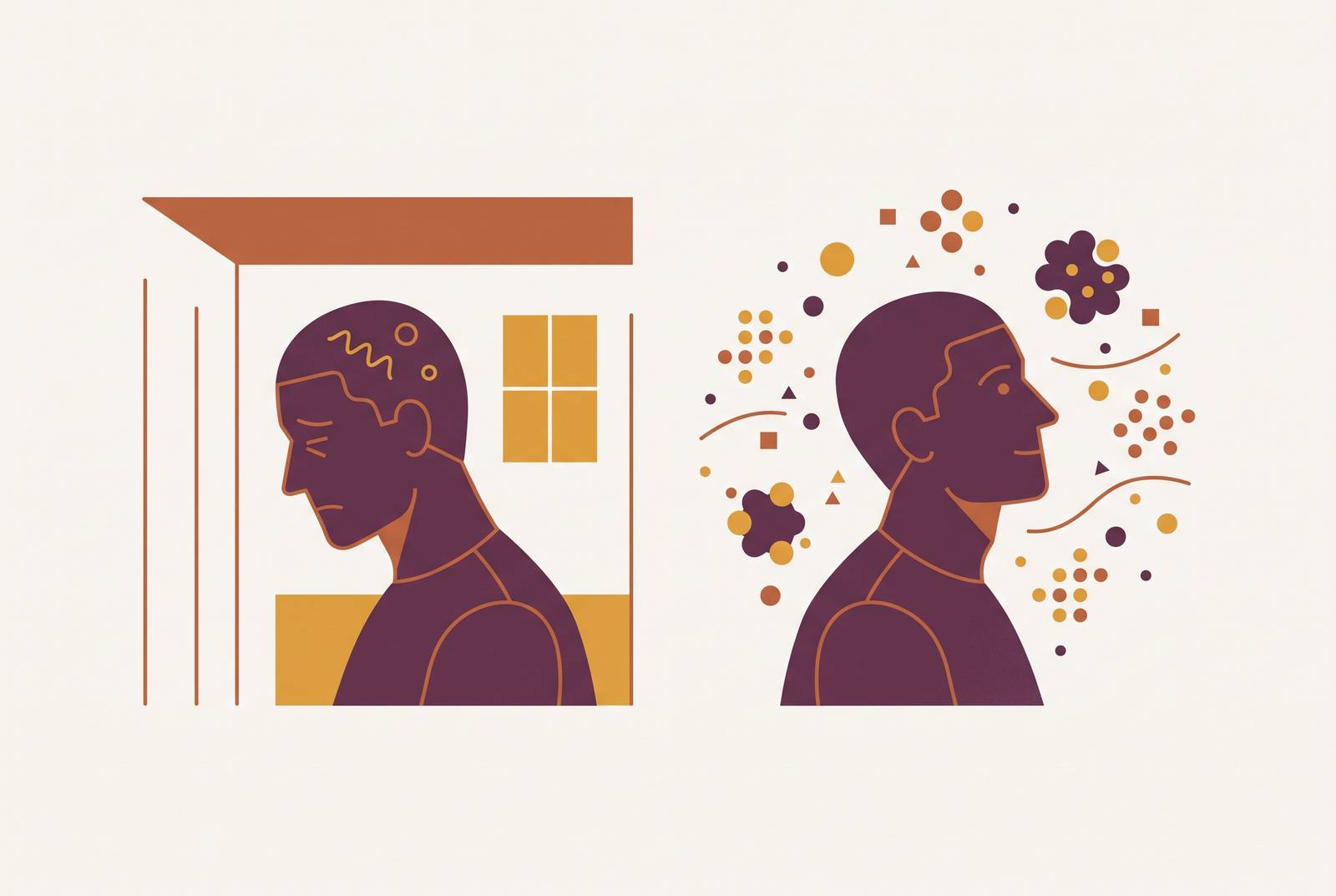
Congestion, fatigue, headaches, watery eyes, that fog that settles in around 2pm and won't lift. Anyone who's felt this indoors has probably reached for the same explanation: allergies. But the symptom list for an immune reaction and the symptom list for a building problem are nearly identical, and that overlap is why so many people land on the wrong diagnosis. A 2024 study surveying 402 people found 91% reported at least one Sick Building Syndrome symptom, which says a lot about how common the experience is, but nothing about how often it actually gets named correctly Sick building syndrome: do outdoor pollutants and pollen affect it?. Most people don't reach for "maybe it's the ventilation." They reach for an antihistamine. If the real cause is an irritant in the air rather than an immune trigger, that pill does nothing, and the person is left assuming their allergies are just untreatable. Getting the identification wrong doesn't just waste a few dollars on the wrong medicine. It means the actual cause, a building system or an immune sensitization, keeps operating in the background, unaddressed, sometimes for years.
Sick Building Syndrome
Sick Building Syndrome describes a specific pattern: headaches, respiratory irritation, fatigue, brain fog, all tied to a particular building by timing and location, with no single trigger anyone can point to and isolate. That last part matters. The defining diagnostic feature isn't the symptom itself, it's the pattern around it: symptoms appear indoors and fade not long after a person leaves. If someone's headache doesn't ease up once they've left the building for a few hours, SBS starts to look like the wrong label Sick building syndrome: do outdoor pollutants and pollen affect it?.
It also isn't the same thing as Building-Related Illness. BRI comes with an identifiable cause, mold allergy, Legionella bacteria, carcinogen exposure, something a lab test or an inspection can name. SBS, by definition, doesn't have that. Nobody can point to the one contaminant responsible. And critically, SBS involves no IgE antibody response and no immune sensitization happening in the background Sick building syndrome: do outdoor pollutants and pollen affect it?. It's irritant-driven, not antigen-driven.
What changed in recent decades to cause this increase? Look at what changed in building design. SBS has in fact been reported with increasing frequency since the 1970s, when energy-efficient airtight construction replaced naturally ventilated buildings, trapping VOCs, particulate matter, and stale air indoors, and both the WHO and EPA recognize it as a distinct condition. The triggers tend to cluster around a few sources: VOCs off-gassing from paint, adhesives, carpet, and furniture, ventilation systems that don't move enough fresh air (airflow in a lot of buildings got cut sharply after the 1970s energy crisis), mold and bacteria growing in damp corners, and outdoor pollutants getting pulled into sealed HVAC systems and recirculated. A 2024 systematic review in the journal Heliyon grouped the causes into two broad buckets, Indoor Environmental Quality factors and Occupant factors, and neither one requires an immune system to be involved at all.
Indoor allergies and the mechanism that matters for treatment
True indoor allergy runs on a completely different biological script. The immune system has become sensitized to something specific, dust mites, mold spores, pet dander, cockroach proteins, and it mounts an IgE-mediated response every time that allergen appears, releasing histamine and other inflammatory chemicals. That's the mechanism that decides everything downstream. Because it's an immune reaction and not a building glitch, the fix has to work differently too: SBS responds to fixing the environment, but true allergy needs the immune response itself addressed, not just the room.
A wrinkle here deserves sitting with. People with a history of allergic conditions, atopy, show a documented association with higher rates of SBS symptoms, and an allergic predisposition may make someone more vulnerable to building-related irritation too. Sometimes they're running at the same time, in the same person, compounding each other. Remember that before locking into either diagnosis too quickly.
The location-and-timing test: the most practical tool for telling the two apart
So how does a person actually tell these apart, without a lab? Location and timing turn out to be the sharpest tool available. SBS follows a building: symptoms appear or get noticeably worse in one specific place, ease up within hours of leaving, and tend to show up in multiple people who share that space. Indoor allergy follows the allergen instead. It shows up at home, at a friend's house with a cat, in any dusty room, and doesn't reliably clear up just because someone changed addresses.
Season adds another layer of evidence. If symptoms ease off sharply in winter, when pollen disappears but dust mites and mold stick around indoors regardless, or if they flare up outdoors during pollen season, that points toward allergy rather than a building issue. Who else is affected matters too. If coworkers or family members in the same space report similar complaints, no matter their personal allergy history, SBS becomes the more likely explanation than individual sensitization. And watch for the reversal pattern: symptoms that flare at the office and vanish at home, or the other way around, in a rhythm that doesn't map onto any pollen calendar or seasonal allergen cycle. That's a classic SBS signature.
Timing of resolution is its own clue, separate from timing of onset. SBS symptoms tend to ease within a few hours of leaving the building behind. Allergy symptoms can linger for days after a heavy exposure, because the immune cascade that's been triggered takes real time to wind down once it's started. A practical way to sort this out without any special equipment: track it for three to five days. Note the time, the location, and who nearby has the same complaints. That short window of notes is often enough to reveal the pattern.
Where the two conditions overlap
Mold sits right at the center of where these conditions overlap. It can cause SBS-type irritation that affects anyone who walks into the room, and it can also trigger true allergic rhinitis, asthma, or hypersensitivity pneumonitis in someone whose immune system has been sensitized to it. Same building problem, two entirely different biological responses playing out in different people.
It gets messier from there. The very same airtight conditions that produce SBS also tend to concentrate allergens Sick building syndrome: do outdoor pollutants and pollen affect it?. Dust mites do well in still, humid air. Mold spreads in poorly ventilated corners. Weak HVAC circulation keeps pet dander suspended in the air longer than it should be. So the building conditions causing SBS are often the same conditions cranking up allergen exposure at the same time, in the same rooms Sick building syndrome: do outdoor pollutants and pollen affect it?.
The numbers back up how widespread this is, and in populations that don't fit the stereotype of "high-allergy people." A cross-sectional study across four health clinics found SBS prevalence at 24.84% among healthcare workers, a group not typically thought of as allergy-prone, which says something important: anyone in a compromised building is at risk, regardless of their personal atopic history Ecological Study of Sick Building Syndrome among Healthcare Workers at Johor Primary Care Facilities. Layer atopy back into that picture and separating one condition from the other becomes genuinely hard to untangle. People with an allergy history report SBS symptoms more often Sick building syndrome: do outdoor pollutants and pollen affect it?. Separating an allergic reaction from a straightforward irritant reaction, without testing of some kind, becomes close to guesswork. A person could plausibly have both conditions running simultaneously, and treating only one leaves the other symptom source fully intact.
What professional allergy testing reveals that self-diagnosis cannot
Symptom tracking gets a person most of the way there. It doesn't get them all the way. Skin-prick testing or specific IgE blood testing identifies immune sensitization to named allergens, dust mites, particular mold species, pet dander, with a level of specificity that no amount of journaling can match. A positive result to an indoor allergen in someone who's symptomatic confirms that immune-mediated allergy is at least part of what's going on. A negative panel across the common indoor allergens shifts the likely explanation back toward SBS or some other non-immune cause.
That kind of testing used to mean a clinic visit and a wait. At-home finger-prick testing, now available through telehealth allergy providers, brings that diagnostic step within reach without ever booking an appointment, which matters most for people who've been managing symptoms with over-the-counter products for years without ever confirming what's actually causing them. On the building side, the equivalent work runs in parallel but through a different kind of professional entirely: HVAC inspection, air quality measurement, VOC testing, handled by a facilities or occupational health specialist rather than an allergist. Neither one substitutes for the other, and running both is the only way to know for certain: the underlying fix belongs in the immune system, the building, or both.
Masking indoor allergy symptoms with medications leaves the underlying immune problem unresolved
If the diagnosis really is SBS, the fix has to be environmental Sick building syndrome: do outdoor pollutants and pollen affect it?. Better ventilation, removing VOC sources, remediating mold, upgrading HVAC filtration. No pill fixes a building's air quality problem, because there's no immune reaction there to medicate in the first place. But if the diagnosis is a true allergy, antihistamines and nasal sprays only ever address the symptom, while the sensitization that produces it goes untreated. They blunt the histamine signal for a few hours. They don't retrain the immune system, so the moment the medication wears off, the same allergen produces the same reaction all over again.
That unresolved reaction has real costs that compound over time. Nasal blockage pushes people into mouth breathing, snoring, and fragmented sleep, and that lost restorative sleep feeds directly into the daytime fatigue and brain fog people were trying to treat in the first place, according to a Sleep Foundation report on individuals with untreated allergic rhinitis. There's a physical reason the fog hits so hard: the brain uses roughly 20% of the body's oxygen supply despite making up only about 2% of body weight, so even a modest drop in oxygen from a stuffed-up nose can produce a noticeable cognitive effect, the same fatigue and fog that get mistaken for SBS to begin with advancedintegratedhealth.com. Someone treating what they believe is a building problem with antihistamines, or treating what they believe is allergy by moving the furniture around, may be addressing the wrong problem for years without ever knowing it.
Immunotherapy for indoor allergy at the root-cause level
For a confirmed indoor allergy, there's a treatment path that goes after the sensitization itself instead of muting its symptoms. Immunotherapy, whether delivered as allergy shots (SCIT) or sublingual immunotherapy (SLIT drops and tablets), works by exposing the immune system to gradually increasing doses of the specific allergen it's reacting to, retraining it toward tolerance instead of continued reactivity. The mechanism isn't a mystery. SLIT induces regulatory T cells that produce IL-10, which drives allergen-specific tolerance and shifts the immune response away from its inflammatory default, a pathway established in peer-reviewed immunology research published in the Journal of Allergy and Clinical Immunology. A 2025 umbrella review in the European Archives of Oto-Rhino-Laryngology went back through the systematic reviews and meta-analyses on SLIT for allergic rhinitis across multiple major databases through June of that year, and the evidence held up.
None of this happens overnight, and it shouldn't be sold that way. Retraining an immune response takes years of consistent exposure, not weeks of symptom relief. That's the tradeoff for a fix that actually lasts instead of one that has to be repeated every single day. And cost doesn't have to be the barrier it once was: telehealth allergy treatment plans start at accessible price points and are FSA/HSA eligible, which lowers the practical hurdle between a confirmed diagnosis and actually starting treatment https://www.doctronic.ai/blog/hsa-fsa-telehealth/. Once allergy is confirmed and immunotherapy is underway, the environmental work, better ventilation, allergen reduction at home, no longer solves the problem alone but instead works alongside it. At that point, a person finally has an accurate map: which symptoms belong to the building, which belong to the immune system, and which lever actually needs pulling to fix each one.
Sources
- Sick building syndrome: do outdoor pollutants and pollen affect it? - PubMed
- Ecological Study of Sick Building Syndrome among Healthcare Workers at Johor Primary Care Facilities
- The parameter of the Sick Building Syndrome: A systematic literature review - PMC
- How does sublingual immunotherapy work? - Journal of Allergy and Clinical Immunology