Dust Sampling for Allergen Quantification in Homes
Measuring household dust reveals months of allergen exposure a single air sample might miss.

Dust sampling turns an invisible problem into a measurable one. Household dust is a biological record, a reservoir that collects weeks and months of what occupants breathe.
That record builds up in the places people spend the most time: carpets, bedding, mattresses, upholstered furniture. These are high-contact, high-dose zones, and dust settles there continuously, layering exposure on top of exposure. Mites rank among the most important triggers of allergy worldwide, and research by Sander et al. (2015) confirms that inhaling mite allergens bound to dust particles can cause sensitization and allergic disease. That finding puts the dust itself, not the mite alone, at the center of the exposure story.
Dust rarely carries just one allergen. The same sample holds traces from cockroaches, pets, rodents, and outdoor sources like pollen and mold spores tracked in on shoes and clothing. A single collection, in other words, can capture the fuller picture of what a household actually breathes day to day, not just one slice of it.
This matters most for symptoms that come and go. A person who feels fine most days but struggles on certain nights or during certain seasons is hard to diagnose from a single air measurement taken at the wrong moment. Dust does not have that timing problem. It answers a basic, practical question that air alone struggles to answer: what are the people in this house actually breathing, averaged over the weeks they have lived there?
The allergen and mold roster a dust sample measures
One sample, run through two lab protocols side by side, can return both a mold score and a full allergen panel. That gives a household a multi-dimensional exposure profile instead of a single yes-or-no result.
The mold side uses a method called qPCR, applied through what is known as the ERMI methodology, to count 36 indicator mold species. Twenty-six of those, called Group 1 species, show up in water-damaged buildings and include Stachybotrys, Chaetomium, and Aspergillus versicolor. The other ten, Group 2 species, are common even in buildings with no water damage. The ratio between the two groups produces a single ERMI score, and that score tracks with chronic moisture problems inside a home. The U.S. EPA developed ERMI in 2007, building it from data collected in the American Healthy Homes Survey. It has not been validated for uses outside research settings, a limitation to keep in mind when reading a score.
The allergen side reports results in nanograms or micrograms of allergen per gram of dust. That is a real, comparable unit, and it moves the conversation well past the simple positive-or-negative readout that many at-home tests offer. A number like that can be tracked over time, compared across rooms, and set against clinical thresholds, which is what turns a lab result into something a doctor or homeowner can actually act on.
How sampling method changes the result
Collecting the sample well matters as much as analyzing it well. The method used to gather and measure dust decides whether clinically meaningful allergen levels get detected in the first place, which makes the collection protocol a scientific choice, not a bureaucratic detail.
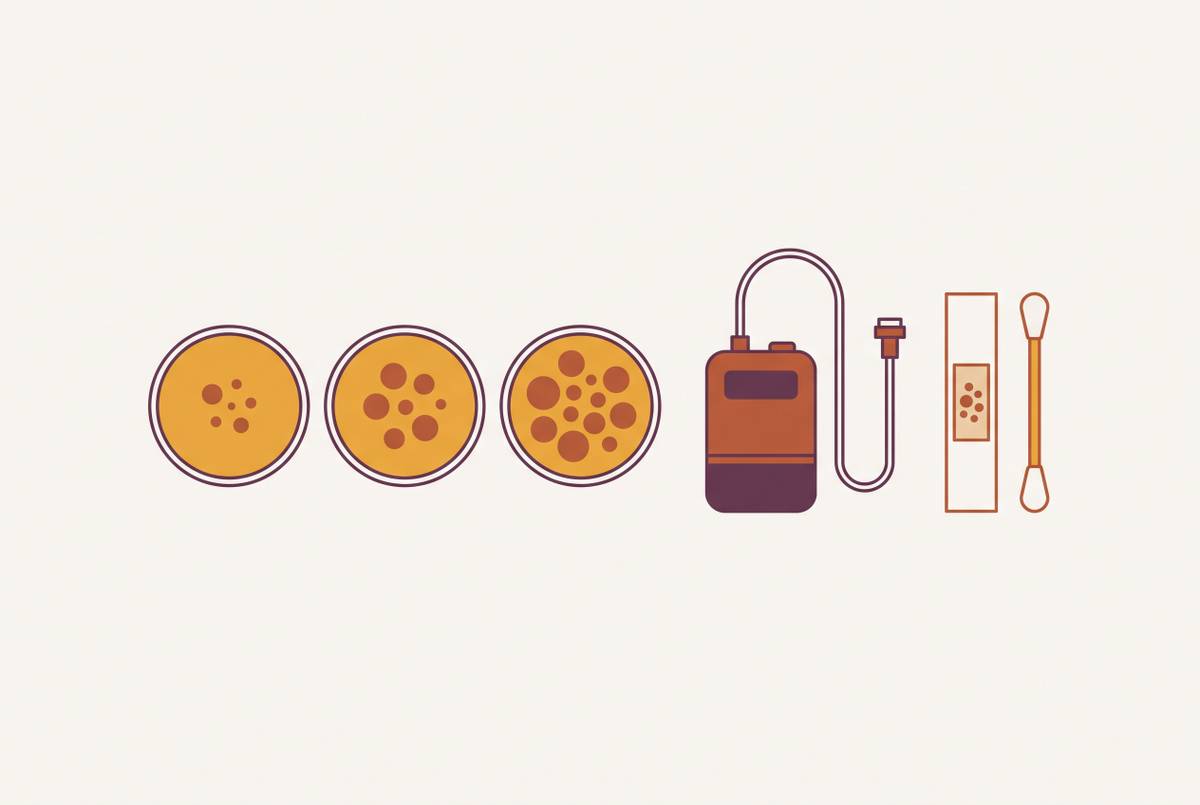
Combined mold and allergen testing typically uses an electrostatic cloth, the kind sold for disposable dust-mop pads, dragged across carpets and other horizontal surfaces where dust settles. That cloth picks up months of accumulated spores and allergens. An ERMI score reflects long-term exposure rather than a single day's conditions.
Dust mite testing carries its own set of complications. Sander et al. (2015) compared three collection methods across homes with asthmatic residents and found that two of them, called EMM and HVS4, pulled in more samples with sufficient dust mass and measured higher allergen concentrations than a third method called AIHA. A weaker collection method can return a result that looks reassuring and is not.
The lab assay stage adds another layer of variation. Different immunoassays recognize different mite species. In the Sander et al. study, a domestic mite assay built to recognize several mite species at once found positive results in a large majority of samples collected with electrostatic dust collectors. Assays built for single species, Acarus and Lepidoglyphus specifically, rarely registered above the detection limit. When those species-specific assays did detect something, though, the concentrations ran high. A broad assay and a narrow one can tell very different stories about the same house.
None of this means testing is a coin flip. It means the question "was my home tested?" is less useful than "which method was used, and does the panel cover the allergens that matter here?" At-home collection has been studied directly against technician visits, using a dust collection device mailed to residents along with written instructions, and the results held up well enough to confirm that subject-collected samples are a workable substitute for an on-site visit. Commercial kits built for this purpose exist, including the MARIA Multiplex Array for Indoor Allergens from Indoor Biotechnologies.
The case for airborne measurement alongside settled dust
Settled dust answers one important question. It does not answer all of them. Different allergens ride on particles of very different sizes, and those particles stay airborne for very different lengths of time, so a floor sample and a true inhaled dose can tell two different stories about the same room.
Dust mite allergen comes from mite feces riding on particles 10 to 40 microns across, and those particles settle back down fairly quickly once disturbed. Cat and dog dander allergens ride on much smaller particles, 2 to 10 microns, and stay suspended in the air for several hours at a stretch (Oliver et al., J Allergy Clin Immunol Global, 2026). A household with a cat can have a low reading on a floor sample and still expose its occupants to airborne cat allergen, Fel d 1, for most of the day.
Measuring air directly has long come with its own tradeoffs. IOM personal samplers, the standard tool in occupational settings, are bulky, loud, and built for short sampling windows rather than a full day or week. Electrostatic dust collectors sidestep the noise issue by passively catching settled particles, but they cannot calculate how much air actually passed over them, and allergen levels on the cloths often fall below what the lab can detect.
Oliver et al. (2026) built a new device to close that gap: an ambient air sampler, small and quiet, that pulls air across a filter at more than 500 liters per minute. Researchers ran it alongside IOM samplers in homes across South Wales, and alongside electrostatic dust collectors in homes across both South Wales and Central Virginia. Over a full sampling run, the new device picked up allergens from dust mites, cats, dogs, mice, and several food sources. The IOM samplers, by comparison, picked up only five allergens total, and at much lower detection rates. The new device also found airborne endotoxin in every single home tested, sometimes after just one day of sampling.
A separate study published in Clinical and Translational Allergy in 2018 arrived at a related conclusion: airborne protein concentration is a key number for assessing type 1 allergy risk, and low-volume air pumps paired with MARIA immunoassays can measure common indoor allergens at levels relevant to sensitization. That approach distinguished homes with pets from homes without more clearly than dust sampling did.
None of this makes settled dust sampling obsolete. It remains the accessible, validated, practical standard, and it measures something real: the allergen reservoir built up in a home over time. What it does not measure directly is inhaled dose on any given day, and the gap between the two can be large in a home with pets. The ambient air sampler work is still research-stage science, not something available to homeowners yet. It points toward where exposure measurement is headed.
Thresholds, risk stratification, and real-world prevalence
A lab result only matters once it is read against a threshold, and dust mite testing has two that carry very different weight. A concentration of 2 micrograms per gram marks the point where sensitization becomes a risk. A concentration of 10 micrograms per gram marks the point where someone already sensitized is likely to have active symptoms. The same number on a lab report means something different depending on whether the person living in that room already carries mite antibodies. A dust result works best alongside an individual's allergy antibody profile rather than on its own.
Survey data from a large sample of houses found mean dust mite concentrations at or near that 2 microgram sensitization threshold in living rooms, bedrooms, and on mattresses. A quarter of living rooms and mattresses, and more than a third of bedrooms, came in above the 10 microgram active-symptom threshold. High-risk levels are common across homes generally, not confined to neglected ones.
Combined testing, mold and allergen together, catches situations that neither test alone would flag. A home can show an ERMI score consistent with chronic moisture damage while also carrying cockroach or rodent allergen above CDC reference ranges. Two separate exposures stacking on top of each other put more strain on the immune system than either one would alone.
Three situations call for this kind of combined testing especially. A household dealing with respiratory symptoms that have no clear cause is one. A buyer doing due diligence on a home with a known history of pets, rodents, or water damage is another. The third is confirming what an allergist's blood panel already suggests, using the dust result to show that the suspected exposure is actually present in the home. In each case, the dust sample turns a suspicion into a documented, specific finding.
How high allergen loads translate into chronic symptoms
The health toll of ongoing allergen exposure runs well past sneezing and watery eyes. Sustained immune activation sets off a chain of effects that reach nasal passages, sleep, and even mental clarity, and all of them trace back to the same source a dust sample can quantify.
Three mechanisms work together here. Allergen exposure prompts the immune system to release histamine and other inflammatory chemicals. Those chemicals congest sinus passages, which cuts down on oxygen delivery. They disrupt the structure of sleep itself by causing nasal obstruction through the night. And at high enough levels, histamine in the brain overactivates a set of receptors called H3 autoreceptors, a kind of built-in shut-off valve, which paradoxically dulls the alertness and mental clarity that histamine normally supports.
Nasal blockage pushes people toward mouth breathing and snoring, and sleep that should restore the body instead leaves it depleted. That fatigue tends to peak the morning after a congested night and drags through the rest of the day, touching school performance, work output, and patience at home. Most people trace that exhaustion back to stress or bad sleep habits. Few trace it back to their own bedroom.
In children and adults alike, unaddressed allergies can cause brain fog, tiredness, trouble concentrating, irritability, and a drop in everyday productivity. These symptoms rarely get labeled as allergic in origin. Instead, people reach for coffee, over-the-counter sleep aids, or whatever productivity trick promises to help them push through.
That is where the dust sample earns its value. If a bedroom sample shows Der p 1 above the 10 microgram active-symptom threshold, the person sleeping there has a concrete, testable explanation for the fatigue and morning congestion that have felt unexplainable. More importantly, it is an explanation that can be acted on.
The path from measurement to treatment
A dust result above threshold is a starting point for further action. The number identifies a specific allergen, in a specific room, at a specific concentration, and that specificity is what makes a response possible instead of guesswork.
The first move is matching the environmental finding to clinical testing. An allergist can confirm sensitization through a blood or skin test, and a dust result that lines up with an antibody profile gives both the patient and the doctor confidence that the home environment is a real contributor.
From there, the room-level detail in the sample points toward where remediation will do the most good. A mattress or bedroom reading above the 10 microgram threshold suggests encasements, hot-water washing of bedding, and targeted vacuuming in that specific room, rather than a blanket, whole-house response. A mold ERMI score tied to moisture points toward finding and fixing the water source itself, since no amount of cleaning solves a problem that keeps regenerating.
Retesting matters too. A dust sample taken months after remediation shows whether the intervention actually lowered the allergen load, turning a one-time result into a measurement of progress. Household allergen exposure is one of the few chronic health burdens that can be measured in concrete units, tracked over time, and brought down with targeted action. That combination, a measurable problem with a measurable fix, is what makes dust sampling worth taking seriously as a health tool.
Sources
- A novel ambient air sampler for detection of allergens and endotoxin
- Airborne protein concentration: a key metric for type 1 allergy risk assessment—in home measurement challenges and considerations
- Feasibility of Using Subject-Collected Dust Samples in Epidemiologic and Clinical Studies of Indoor Allergens
- 1 A Side by Side Comparison of Three Allergen Sampling ...
- Environmental assessment and exposure control of dust mites: a practice parameter - PMC