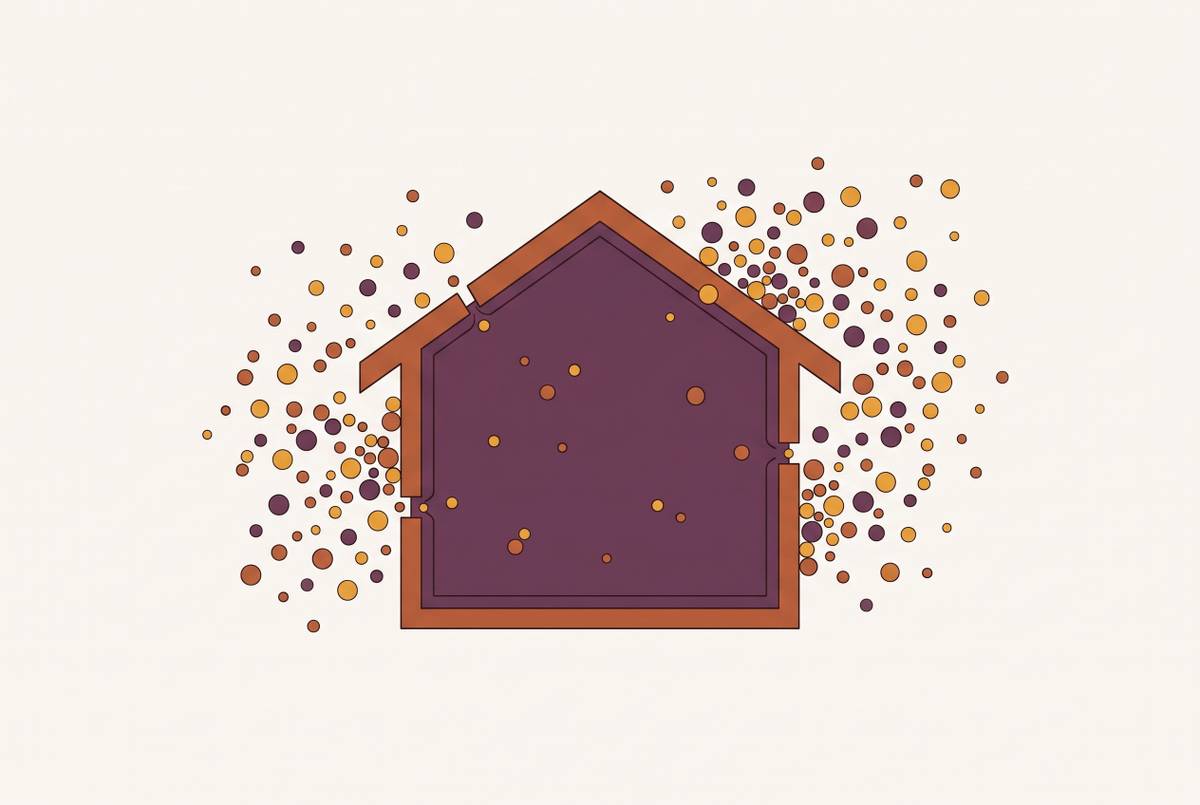
Pet Dander Persistence in Homes Without Pets
Pet allergens travel through clothing and ventilation, settling invisibly for months.
Pet dander is not fur. It's microscopic skin flakes and proteins from saliva, urine, and skin glands, and it appears in homes that have never had a cat or dog cross the threshold. That's the puzzle this piece works through: how something this small ends up somewhere it was never invited, and why it sticks around long after the source is gone.
The proteins doing the damage have names. Fel d 1 is the main one in cats. Can f 1 and Can f 2 cover dogs. These are what the immune system flags as a threat, not the hair itself. Shaving a dog or brushing a cat more often doesn't solve the problem people think it solves.
Size and texture explain a lot here. Dander particles are small enough to stay airborne for hours once disturbed, and their rough surface gives them something to grab onto: fabric, drywall, the inside of a duct. According to a professional allergy association, cited by AllergyWorx, dander is "incredibly adhesive," and once it's circulating, it can stay suspended for hours before settling anywhere and everywhere.
Compare that to pollen, which is considerably larger and drops out of the air fairly quickly once released. Dander is smaller. It travels deeper into airways and lingers longer on the surfaces it lands on. Per CVS, settled dander can remain on surfaces for months. And according to Allergy Defender's research, the allergen stays biologically active for 30-plus weeks, even with no animal anywhere near the building. Tiny, sticky, and long-lived: that combination is what separates dander from almost every other allergen in a home, and it's what makes "no pets here" such an unreliable assumption.
How dander gets into homes that have never housed a pet
Start with scale. More than 67 million households nationwide. households share space with a cat or dog, according to AllergyWorx's figures. That's an enormous reservoir of allergen constantly being generated, and it doesn't stay contained to the homes producing it.
Three routes carry it out.
Clothing and personal items do a lot of the work. Dander clings to fabric the way pollen clings to a windbreaker, and it travels with whoever's wearing it. A coworker with two cats at home doesn't need to bring the cats to the office to bring Fel d 1 into it. The jacket does that on its own.
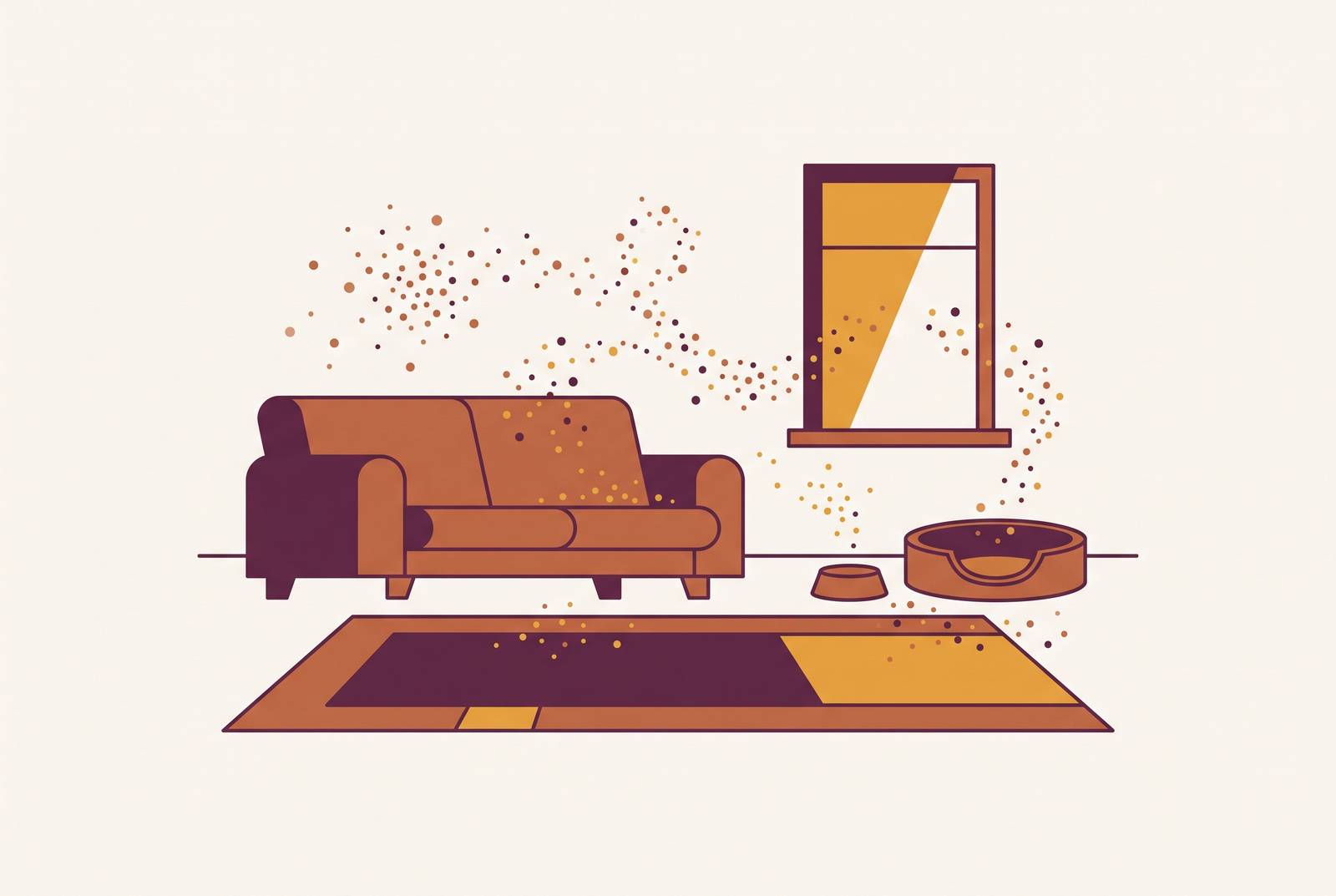
Shared ventilation is the second route, and it's arguably the sneakier one. Apartment buildings, schools, and offices running centralized HVAC don't respect unit boundaries. Air gets pulled from one space and pushed into another, so a pet confined to a single apartment can still seed allergen through an entire floor.
Third: secondhand surfaces. Used furniture, dry cleaning returned through a shared facility, a couch that moved from one household to the next. Any of these can carry dormant dander that reactivates once it's back in circulation somewhere new.
This is backed by research from a federal environmental health research body, cited in one research summary, which found dog and cat allergens present in nearly all homes nationwide. homes, including those with no pet history at all. CVS's 2026 material goes further, noting that pet allergens are present in classrooms, workplaces, and other spaces animals have simply never occupied. Once dander settles into carpet, walls, and furniture in a pet-free home, ordinary activity, vacuuming, dusting, walking across a rug, kicks it back into the air. Exposure doesn't require contact with an animal. It just requires living in a building that other people, and their pets, have also passed through.
Where dander hides once it's inside
Soft surfaces do most of the trapping. Carpets, upholstered chairs, curtains, stacked bedding: all of it grabs dander and holds onto it in a way that resists a quick wipe-down.
Then there are the zones nobody thinks to clean. Baseboards, behind the couch, under the refrigerator, inside the ductwork. These spots sit undisturbed for months, and that's precisely why they accumulate so much. HVAC systems deserve their own mention here: the system pulls dander out of room air, deposits it inside the ducts, and redistributes it with every heating or cooling cycle. This gets particularly acute in winter, when windows stay shut and the same air keeps recirculating through the same ducts.
Clutter makes the whole situation worse. More objects means more surfaces for dander to land on and fewer clear paths for a vacuum or a damp cloth to actually reach, according to findings. It's a compounding problem: the harder a space is to clean, the more dander accumulates, and the more accumulation there is, the harder the space becomes to fully clean.
The bedroom is the one room worth singling out. People spend something like a third of their lives there, in close, sustained contact with a mattress and pillows that rank among the densest dander reservoirs in the entire house. The room where a person is least active, and breathing most slowly and deeply, is also the room holding the highest concentration of the allergen.
A recently vacated rental, previously home to a cat or dog, can carry an allergen load in these hidden zones comparable to a home where the animal still lives. Allergy Defender's research notes that professional carpet cleaning alone often isn't enough to bring that load down. The dander isn't sitting on top of the fibers. It's down inside them.
Why the 30-plus-week active lifespan matters more than most people realize
Thirty-plus weeks. Say that out loud and it sounds abstract, but according to Allergy Defender's findings, dander remains biologically active for well over half a year after it has settled. One visit from a friend's cat-owning jacket in January can still be producing symptoms in March, and there's no obvious reason for anyone experiencing that to connect the two.
What does "active" actually mean here? It means the protein structure hasn't broken down. Even after the particle has dried and settled into a carpet fiber, it retains the shape that a sensitized immune system recognizes and reacts to. Drying doesn't neutralize it. Time, eventually, does, but slowly.
Picture two situations. A visitor with cats stops by once, in January. Two months later, symptoms appear or get worse, and the sufferer has zero framework for linking a one-time visit to a problem in March. Or: a tenant moves into an apartment that previously housed a dog, scrubs every surface before move-in, and still reacts for months, because the cleaning reached the carpet's surface but not what had worked its way into the ducts and the wall cavities.
Winter compounds all of this. Heating systems recirculate dander that's already settled, windows stay closed so ventilation drops, and indoor allergen concentration climbs. Other indoor allergens are also elevated when windows stay shut, burying the pet dander contribution inside a mix of triggers that's genuinely hard to pull apart without testing. Cleveland Clinic's 2025 update adds another wrinkle: some allergy symptoms don't start until hours or even days after exposure. That lag combines with a 30-week active window, making the causal chain close to invisible. Neither the sufferer nor a general practitioner is likely to trace it back without deliberately looking.
What symptoms pet dander causes in people who don't know they're exposed to it
The classic list, per Cleveland Clinic's update, covers sneezing, a runny or stuffy nose, itchy and watery eyes, and hives. Familiar stuff. What's less familiar is how often people fail to connect these symptoms to an animal they've never lived with.
Skin can react too. Being licked or scratched by a visiting pet can set off a reaction, and CVS's 2026 material notes that even touching a surface with dander on it can cause redness and itching, no direct animal contact required.
Congestion is rarely just congestion. Chronic nasal blockage leads to mouth breathing, which disrupts sleep. For people with asthma, the stakes rise: pet allergens can settle deep into the airways, and per Cleveland Clinic, ongoing exposure can worsen asthma symptoms in anyone already sensitized.
How common is this, really? One health system puts national. cat and dog allergy prevalence at up to 3 in 10 people. CVS's 2026 figures put the global estimate at 10 to 20 percent. Either way, this isn't a rare condition affecting a small slice of the population.
Chronic, low-level exposure produces a dull, constant kind of congestion rather than a dramatic, obvious reaction. That steadiness is what makes people dismiss dander as the cause. If a symptom feels constant instead of triggered, it doesn't read as an allergy. It reads as a personality trait, or a permanent condition of living indoors. Anyone who's "always a little stuffy inside" or "just gets congested every winter" may be describing something with a name and a source, not a cold that never quite ends and not simple aging.
The downstream health effects that rarely get attributed to pet dander
Fatigue belongs on this list, and the mechanism matters more than the symptom itself. Pet allergy has been linked to tiredness through nasal inflammation, elevated histamine levels, and disrupted sleep, not through some general drain on the body's energy. The fatigue is downstream of a blocked nose, not a separate effect running in parallel.
Follow the chain: congestion leads to mouth breathing, mouth breathing leads to snoring and fragmented sleep. One research brief citing Sleep Foundation findings notes that people with untreated allergic rhinitis wake more often overnight and get less deep sleep. Deep sleep is when memory consolidation happens, so losing it doesn't just cost a night of rest. It compounds, morning after morning, into something that looks a lot like generalized exhaustion.
Brain fog runs through a similar circuit. Histamine isn't only about sneezing, it also works as a neurotransmitter that helps regulate alertness. When allergic inflammation throws histamine and cytokine signaling out of balance, both mental sharpness and energy take a hit, according to the same research brief. Older, first-generation antihistamines carry sedative effects of their own. Someone managing undiagnosed dander exposure with an over-the-counter pill might just be swapping one kind of fog for another.
Fatigue has a dozen plausible causes: stress, poor sleep hygiene, diet, aging, a demanding week at work. Spotting a pattern gets even harder when the trigger isn't seasonal. Pollen has a season. Indoor dander doesn't, so there's no obvious calendar cue pointing back to the source. And the "I don't own a pet" fact feels like solid, case-closed evidence. That fact keeps people from connecting fatigue, fog, and congestion back to dander in the first place. The blind spot isn't a failure of attention. It's built into the logic of the assumption itself.
Why the "hypoallergenic pet" and "just get rid of the animal" assumptions both fail
No cat or dog breed is completely allergy-free. Per research published in the Annals of Allergy, Asthma and Immunology, "hypoallergenic" is a marketing term applied to breeds like poodles, Portuguese water dogs, and Siberian cats based on shedding behavior and coat length. But the allergen doesn't come from the coat. It comes from skin glands, saliva, and urine, sources that exist regardless of how much or how little fur an animal has.
So removing the animal should solve the problem, right? Not necessarily, and the reason comes straight back to that 30-plus-week active lifespan covered earlier. Even after a pet is gone, dander already embedded in carpet fibers, upholstery foam, and ductwork keeps triggering reactions for months. The animal leaving doesn't erase what the animal already left behind.
This plays out in a specific, recognizable scenario: someone who has never owned a pet moves into a unit that previously held one, cleans every visible surface, and keeps reacting anyway. Research points to exactly this pattern, noting that professional cleaning often can't reach dander buried deep in carpet fibers or lodged inside ducts.
So the useful question isn't "do I own a pet." It's whether there's been sustained contact with spaces or people carrying dander, current or past tenants, visiting coworkers, secondhand furniture, shared ventilation. That reframe is what actually opens the door to a real diagnosis instead of a dead end.
How to reduce dander in a pet-free home and why elimination is not realistic
Set the right goal first. The aim is getting allergen load below the threshold that triggers symptoms, not achieving a home with zero dander in it. CVS's 2026 material is blunt about this: complete avoidance of pet allergens is close to impossible in the world as it's actually built.
Air filtration does real work. HEPA air purifiers are designed to trap particles at or below 0.3 microns, capturing fine airborne allergens including pet dander. HEPA vacuums capture up to 99% of airborne particles, dander included, according to Allergy Defender's findings. On the HVAC side, a MERV 13-rated filter is the standard for a dander-sensitive household, changed monthly, or more often if the household gets frequent visits from pet owners.
Surfaces need their own approach. Weekly vacuuming of carpets, rugs, and upholstery is the baseline, and hard flooring is generally easier to keep dander-free than carpet. Damp-cloth or microfiber dusting on baseboards and hard surfaces matters too, since dry dusting just launches particles back into the air instead of removing them. Decluttering helps for a simple reason: fewer objects means fewer surfaces for dander to land on, and easier access for the vacuum and the cloth to actually do their job.
The bedroom deserves the most attention of any room in the house. Allergen-proof encasements on the mattress and pillows, a rule against pet-owning visitors sitting on the bed, and bedding washed frequently in hot water: these steps target the room where exposure runs highest and duration runs longest. Reducing allergen load during sleeping hours can meaningfully affect both symptom severity and sleep quality, given how much of the day is spent there.
Ventilation creates its own tension. Opening windows improves air exchange, which helps clear settled dander, but it also lets outdoor pollen in during pollen season. That tradeoff isn't one-size-fits-all. It depends on the time of year and the local pollen count, and it calls for judgment rather than a fixed rule.
None of this reaches zero. A person sensitized to Fel d 1 who takes public transit, works in an office, or regularly hosts visitors who own cats is going to keep receiving dander deposits no matter how clean the home gets. Environmental control lowers the dose. It doesn't remove the source.
When environmental control is not enough and what testing reveals
If congestion, fatigue, or eye symptoms keep going despite real effort on cleaning and filtration, that's a signal worth taking seriously. Either the allergen load is more entrenched than home-based measures can reach, or more than one allergen is in play at once.
Winter makes that second possibility likely. Windows are closed, heat is running, and dust mites, at a national sensitization prevalence of 38.0% according to Quest Diagnostics data, along with pet dander and mold spores, all peak indoors at the same time. A non-pet owner dealing with winter symptoms may not be reacting to transferred dander alone. Multiple triggers can be stacking on top of each other, which is part of why the symptoms feel so hard to pin down without a clearer answer.
That's what testing is for. A skin prick test involves a provider placing droplets of specific allergens on the skin and checking for a reaction, per Cleveland Clinic. A blood test measures IgE antibody levels against specific allergens, can be done without pausing antihistamines beforehand, and is available through a healthcare provider.
Either approach turns a vague, months-long mystery into a specific answer. And given how far dander can travel, how long it stays active, and how easily its symptoms get mistaken for something else entirely, a specific answer is worth more than another season of guessing.