Dust Mite Allergen in Car Upholstery and Carpeting
Your car cabin holds dust mite allergen year-round.

Dust mite allergen in car upholstery and carpeting is an overlooked part of everyday allergy exposure. A cabin can support mites, collect allergen carried from home, and release it into the air when someone sits down. The central distinction is that cleaning reduces the allergen reservoir, while treatment addresses the immune response that makes exposure a problem.
Why the car cabin is a dust mite habitat most allergy sufferers never think to address
A bed, a sofa, and a bedroom carpet fit the familiar picture of a dust mite habitat. A car seat rarely comes to mind, though it has much the same conditions in a smaller space. The cabin is warm, has little light and plenty of fabric, and gets a steady supply of shed human skin. Upholstered seats and carpeted floors therefore have more in common with soft furnishings at home than their setting suggests. Dust mites also need relatively high humidity to survive, so cabin moisture matters as well as fabric and warmth.
The AAAAI/ACAAI practice parameter identifies carpeting, bedding, and upholstered furniture as places where mite allergens occur in settled dust. That makes the seat and floor more relevant than the dashboard or glass.
Research on house dust mite allergen in cars points to transfer from the home, with car levels largely reflecting those in the owner's home. Clothing carries allergen from the home to the car, leaving it on seats each time it touches them. The vast majority of U.S. homes have dust mite allergens in at least one bed, so this is not an unusual pathway. The commute can extend an exposure that began indoors.
How allergen concentrations build in car upholstery and carpeting over time
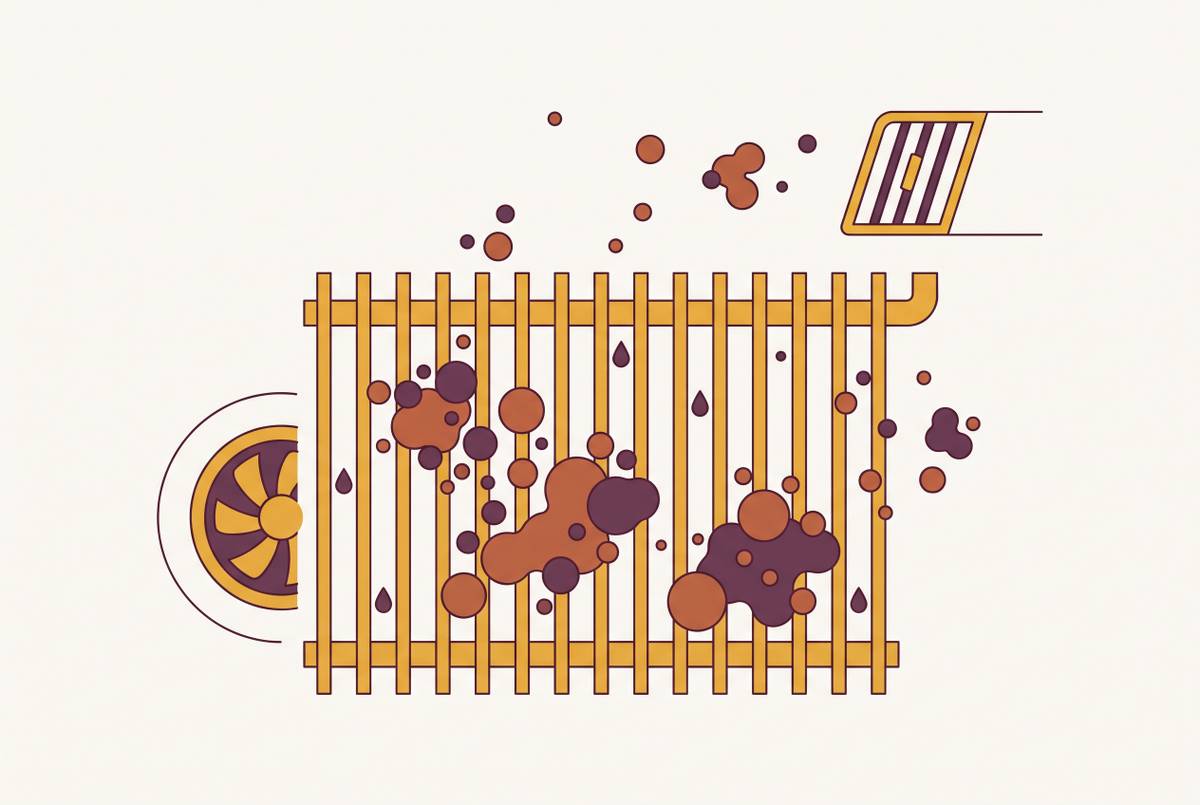
Mite allergen particles are relatively heavy and settle within minutes after disturbance. They fall out of the air and collect in fabric and settled dust. Upholstery and carpeting thus act as a reservoir, holding material between journeys. A cabin can have little allergen in the air at one moment and still have a lot of it overall.
Repeated use adds to that reservoir. The same occupants return with clothing that can deposit more allergen, particularly when garments are washed infrequently. The AAAAI/ACAAI practice parameter identifies clothing as an important possible source of mite allergen exposure for this reason. In a small, enclosed cabin with limited ventilation, those repeated deposits matter over time. What arrives on one trip is not necessarily gone before the next.
Does that mean a car has to match a bedroom's allergen concentration to cause trouble? No, because a sensitized person can experience persistent exposure without a dramatic reaction that clearly announces its source. The concern is enough allergen to sustain repeated irritation. Time in the car may be intermittent, but the reservoir remains available for each return. That distinction explains how a relatively short daily journey can become part of a continuing exposure pattern.
What disturbance does to allergen particles inside a car — and why opening windows is not a fix
Stored allergen becomes an inhalation problem when movement lifts it from fabric into the cabin air. Sitting down disturbs the seat, and further movement can disturb it again. The occupant is then breathing close to the surface that released the particles. In the confined cabin, there is less room for those particles to disperse than in a larger space. A journey is therefore not just time spent near dusty material, but an opportunity to inhale what movement releases.
The AAAAI/ACAAI practice parameter notes that mite allergen particles settle within minutes after disturbance. That short airborne period does not make the exposure irrelevant, because it overlaps with the time someone is seated and breathing nearby. Children or pets moving in the car can add further disturbances during a trip. The American Lung Association identifies inhaled mite feces, urine, and decaying bodies as sources of allergic reactions.
More air exchange may briefly lower the airborne concentration, but it does not remove allergen embedded in the fabric pile. Once particles settle on the seat and carpet, they can be stirred up again.
The symptoms that accumulate during a daily commute and why drivers misread them
For a sensitized occupant, inhalation can trigger an immune response that releases histamine and inflammatory cytokines. These produce familiar allergic rhinitis symptoms, including sneezing, itchy eyes, nasal congestion, and fatigue. A stuffy nose or foggy feeling may seem like part of a difficult morning. Mild symptoms do not always supply an obvious clue about where exposure occurred.
Symptoms that start during the drive and are more noticeable by mid-morning can seem to come from work stress, poor sleep, or seasonal pollen exposure. None of those explanations directs attention back to upholstery. Yet poor sleep and allergy symptoms can also make each other worse. Histamine has a role in the sleep-wake cycle, and allergic reactions can disrupt sleep quality, potentially carrying the effects of one day's exposure into the next.
Nasal congestion adds to this burden by making nose breathing harder and encouraging mouth breathing. That can further impair sleep and amplify next-day difficulties with concentration and mood. The American College of Allergy, Asthma & Immunology notes that allergy-related fatigue and cognitive impairment can reduce hand-eye coordination and contribute to a greater risk of car accidents. This makes persistent symptoms relevant to driving as well as comfort. It does not, however, mean that fatigue during a commute proves the car is the cause.
What actually reduces dust mite allergen in car fabric — and the distinction between killing mites and removing allergen
Killing mites and removing their allergen proteins are separate tasks. A method that reduces the live mite population does not necessarily make the material left in fabric harmless. Steam kills mites, while vacuuming removes allergen-bearing dust. Neither fully denatures the allergen load already embedded in fabric fibers, meaning neither completely changes those proteins so they lose their allergic activity.
Research on carpet inactivation found that steam vapor cut the number of live mites the most out of the methods tested. Yet one carpet study found no statistically significant allergen-inactivating effect from either steam vapor or vacuuming, even though both reduced allergen concentration and load through physical removal. Vojta et al. found that dry steam cleaning plus vacuuming, and vacuuming alone, significantly reduced carpet mite allergen in low-income urban homes.
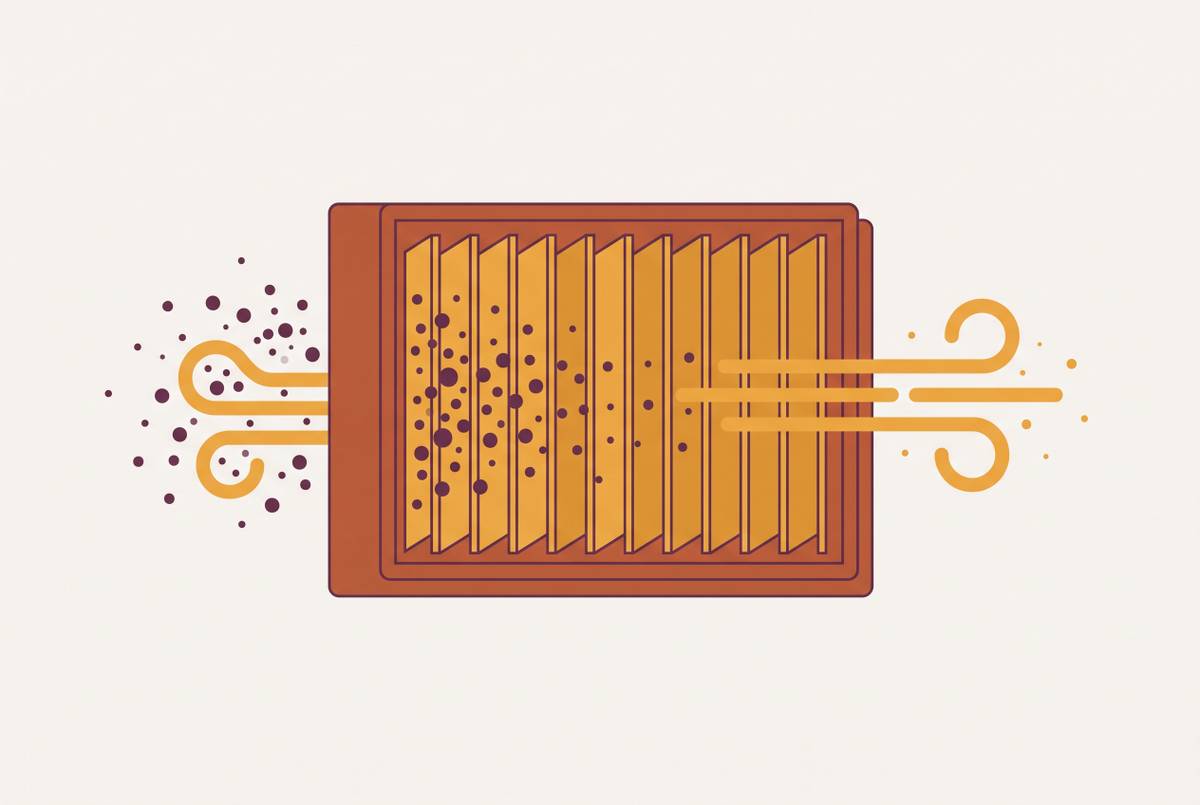
Regular vacuuming of car carpeting and upholstery reduces the settled load available for disturbance. HEPA-filter vacuums are preferred because standard vacuum exhaust can return fine allergen particles to the air. Professional hot-water extraction every 12–18 months is a reasonable practical extension of the carpet-cleaning interval described in the notes. Using the methods together can shrink the reservoir, though some allergen can remain on the surface.
Moisture control addresses a different part of the problem by making conditions less favorable for mites. Keeping windows cracked when parked, or using air conditioning with recirculation off, can support lower cabin humidity over time. This differs from opening a window during a journey to clear airborne particles. Washable, tightly woven seat covers, laundered regularly at temperatures sufficient to kill mites, can help reduce the reservoir on the main contact surface. Acaricide-based fabric protectants also exist for upholstery as an adjunct to physical cleaning.
Why environmental controls alone are insufficient for sensitized individuals — and what changes the immune response itself
Reducing exposure buys time and lowers the allergen load, but it does not change the immune system's set point. For someone already sensitized, whatever allergen still reaches the airway can continue to provoke an excessive response. Cleaning the car also cannot remove exposure in the home, workplace, or other shared settings. Environmental control is therefore a way to reduce harm.
Antihistamines and nasal sprays help suppress symptoms downstream of the allergic response. They do not alter the underlying IgE-mediated sensitization that causes it. Allergen immunotherapy addresses that underlying allergic disease. Sublingual immunotherapy for house dust mite allergy, or HDM SLIT, introduces controlled doses of allergen to specialized immune cells under the tongue. Over time, this is intended to teach the immune system to tolerate HDM proteins.
A 2024 five-year longitudinal study in Journal of Allergy and Clinical Immunology: Global found improved lung function and reduced airway wall area percentage with HDM SLIT. It also found decreases in exhaled nitric oxide, blood eosinophil, and serum-specific IgE for HDM that were sustained across the five-year period. Because the study was longitudinal, the findings should not be treated as proof that early treatment prevents progression in every patient.
A 2024 phase-III randomized controlled trial of the SQ HDM SLIT-tablet in children found clinically relevant reductions in allergic rhinitis and conjunctivitis symptoms and medication use, with improved disease-related quality of life. That evidence addresses a different group and outcome from the five-year study, so the findings should not be collapsed into one universal promise. Together, they explain why immunotherapy has a role when the immune response itself needs attention. HDM sensitization is associated with poorer lung function, greater medication requirements, more asthma symptoms, and chronic rhinosinusitis. Treatment addresses a dimension of that burden which a clean car seat cannot reach.
How sublingual immunotherapy for dust mite allergy fits a commuter's practical life
For a driver returning to the same seat each morning, a treatment also has to fit ordinary life. Exposure can span the home, car, workplace, and public transit, making complete avoidance impractical. A daily at-home sublingual drop or tablet can be easier to fit around that pattern than weekly clinic injections. It targets the response carried into every environment. Cleaning remains useful because reducing exposure and changing sensitivity do different jobs.
Allergy shots must be given in an office, where the patient stays for a while afterward to be watched because there is a small but real risk of systemic allergic reactions, including anaphylaxis. SLIT has a lower risk of systemic reactions, which are extremely rare, so it can be taken at home after a supervised first dose. Mild local effects can include oral itching, lip swelling, throat irritation, or nausea. These occur most commonly in the first few weeks and generally resolve with continued use. A doctor still needs to guide home treatment, even when a dusty seat prompts someone to seek care.
Telehealth-based allergy care can make care easier to fit into the day through virtual consultation, at-home finger-prick IgE testing, and doctor-ordered treatment plans sent to the door. The cost of allergy testing and doctor-ordered treatment plans can be reimbursed under IRS Code Section 213(d) and paid with FSA/HSA funds, which can help with out-of-pocket costs. Access matters because a manageable routine is relevant to someone whose exposure recurs every working day. Knowing that upholstery can hold allergen is the first step toward understanding that routine. Knowing how the immune system responds is the second, and that is the part treatment can change.
Sources
- Dust Mites
- Long-term efficacy of house dust mite sublingual immunotherapy on clinical and pulmonary function in patients with asthma and allergic rhinitis - PubMed
- Environmental assessment and exposure control of dust mites: a practice parameter - PMC
- Fabric, carpet and upholstery protectant with biocide and acaricide